Domestic
Arnaud Guillois: 'Malagasy Youth's Voice Must Be Heard and Respected'
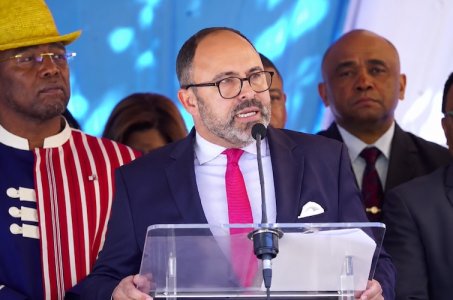
French Ambassador Arnaud Guillois's final Bastille Day celebration in Madagascar was marked by a message primarily addressed to the youth. Days before his permanent departure from the island, the ambassador chose to place young Malagasy at the heart of his speech, believing they now occupy a decisive role in the country's future. Before Malagasy authorities, diplomatic corps representatives, and Franco-Malagasy cooperation partners gathered at the French Residence in Ivandry, he affirmed that "the voice of youth must be heard, respected, and taken into account," making this conviction the central theme of his final major official address. For the French diplomat, young people can no longer be considered mere witnesses to the country's transformations. They are, in his view, already key players on political, economic, and civic levels. This recognition comes as Madagascar continues its Refoundation phase and public expectations remain high. Guillois recalled that youth express strong aspirations for a more dignified life, more effective institutions, greater transparency in public management, and resolute action against corruption. All demands that, in his eyes, deserve to be fully integrated into political leaders' decisions. The ambassador also addressed September 2025 events, which profoundly altered Madagascar's political landscape. He explained that France chose to support the new authorities in a cooperation approach, considering they showed willingness to meet public expectations. In his speech, he emphasized this commitment was based notably on addressing aspirations carried with determination by part of the youth, sometimes at great cost. For him, meeting these expectations is essential to the country's stability and development. Beyond this political dimension, the Bastille Day reception also provided an assessment of cooperation between the two states. Malagasy Foreign Minister General Ely Razafitombo highlighted several projects carried out with French support. He cited investments in urban infrastructure, the Padef II program dedicated to urban development, agricultural initiatives to strengthen climate change resilience, and actions in rural electrification, health, higher education, research, transport, energy, urban planning, and justice. The Malagasy foreign minister also announced the signing of three new financing conventions with the French Development Agency. These agreements concern financing priority social spending, strengthening the judicial system through the Pagema II project, and continuing investments in vulnerable neighborhoods of Greater Antananarivo with Lalakely IV. He also recalled results from the "Tantsoroka ho an'ny Diaspora" (Tady) program, which mobilizes skills of Malagasy living abroad and already benefits nearly 30,000 people, mainly women engaged in local initiatives. This reception illustrated both countries' shared commitment to continuing cooperation in many strategic sectors. The minister emphasized convergence of views between Antananarivo and Paris on maritime security, Indian Ocean stability, combating transnational crime, and respecting international law. One subject, however, was not addressed by either official: the Scattered Islands. This absence did not overshadow the message Guillois wished to leave before his departure: Madagascar's future necessarily depends on youth being heard, respected, and fully involved in decisions affecting the country.
Source: Madagascar Tribune