Society
Fighting malnutrition: Targeting most vulnerable communes to maximize impact
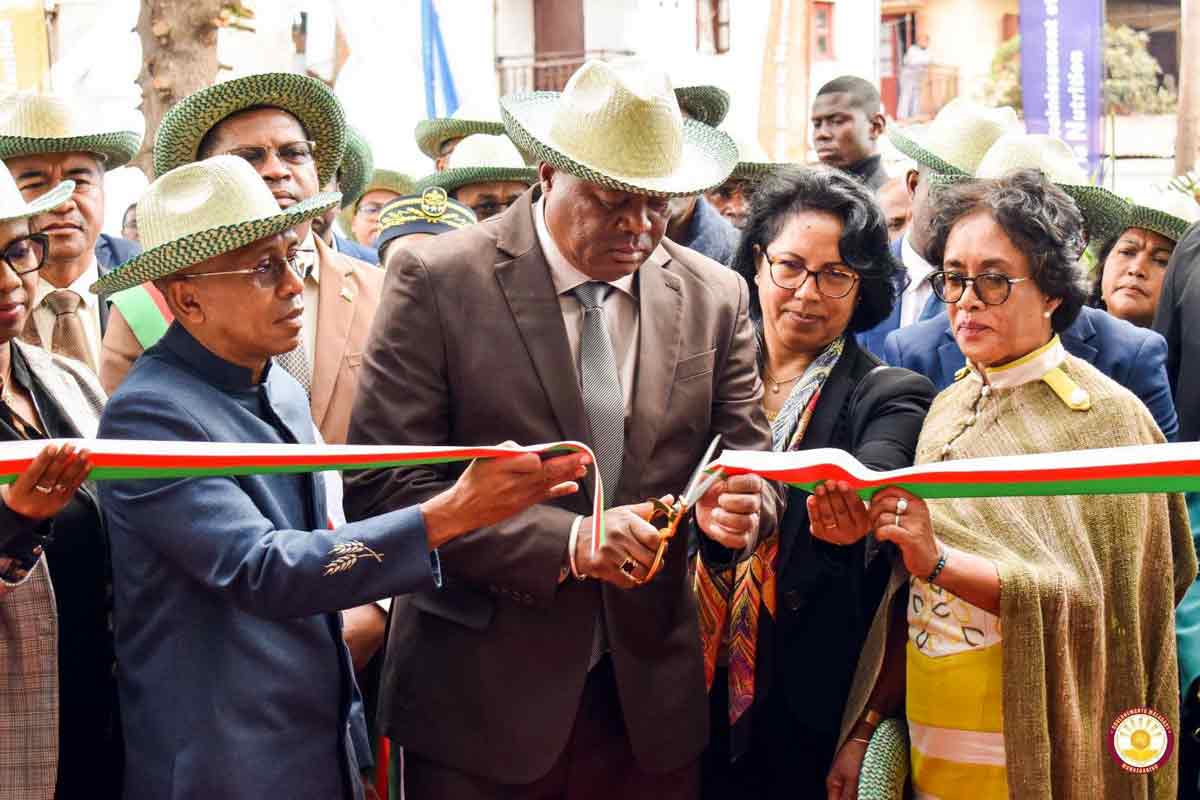
At the inauguration of ONN's administrative building in Nanisana, the National Office of Nutrition unveiled an offensive strategy based on surgical targeting of communes most affected by malnutrition to combat this scourge. To support this multisectoral effort, the government promises recovered financial sovereignty by 2027, to stop leaving the fate of a third of Malagasy children solely to donors. A targeted offensive This is the new approach adopted by the National Office of Nutrition (ONN) to reverse the curve of chronic malnutrition in the Great Island. Henceforth, emphasis will be placed on rigorous targeting and selection of communes showing the most critical prevalence rates. The objective is to concentrate simultaneous and massive action there. Inaugurated yesterday in Nanisana, ONN's new administrative offices served as a platform to outline this new roadmap. According to Fanja Rakotondrainibe, national coordinator of the institution, effectiveness will now rest on mandatory convergence of six strategic sectors: education, health, agriculture, social protection, access to water and sanitation, and risk and disaster management. None of these levers must be neglected if lasting impact on the ground is to be achieved. Regarding the newly inaugurated infrastructure in Nanisana, it was built under the Project for Improving Nutritional Results (PARN), with World Bank support. Budget But the real revolution lies in the financial component. Prime Minister Mamitiana Rajaonarison firmly pointed out the country's historical dependence on international aid: "It is quite surprising to see the budget with which ONN operates, when there is almost no state contribution. Until now, the fight has been delegated to donors." To remedy this, a substantial increase in ONN credits will be included in the state budget for 2027. In parallel, a call for national unity was launched through creation of a "Basket Fund," a common fund allowing all Malagasy to contribute to this national effort. Although the chronic malnutrition rate declined from 39% in 2021 to 37% in 2025, the situation remains critical: a third of children under five still suffer from it in Madagascar. The battle is far from won, but the course is now set.
Source: Midi Madagasikara