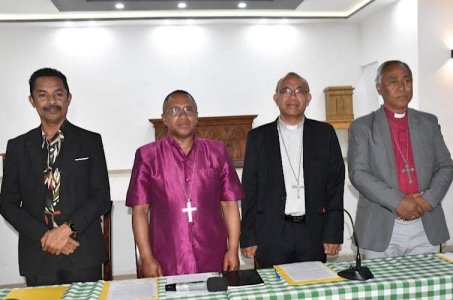
Following the statement from the Conference of Bishops of Madagascar (CEM), the Ecumenical Council of Christian Churches of Madagascar (FFKM) has broken its silence on the country's deteriorating security situation. As violent deaths, troubling disappearances, and body discoveries fuel deep concern among the population, the four church leaders believe the time has come to speak firmly. Their message comes as religious leaders intensify calls for the preservation of human life and the restoration of trust between citizens and authorities.
In its declaration, the FFKM calls on all Malagasy people to exercise restraint and discernment. Church leaders urge everyone to reject violence, settling of scores, defamation, and the spread of unverified information that risks escalating tensions. According to them, the current crisis can only be overcome through inclusive dialogue based on mutual respect and the values of "Fihavanana malagasy." To support this peace-building effort, they invite all parishes nationwide to organize special prayers for victims, bereaved families, those affected by recent tragedies, and the nation's future.
Religious leaders emphasize that human life remains sacred and its protection is a collective duty. They stress that respect for each person's dignity, the pursuit of truth, and the application of fair justice are essential foundations for lasting peace. For the FFKM, the Church cannot remain silent when lives are lost or families live in anguish, which is why it deems it necessary to appeal to the national conscience regarding this deeply concerning situation.
The Ecumenical Council condemns all forms of violence, negligence, recklessness, or irresponsible behavior that have led to recent loss of life. The four church leaders extend condolences to bereaved families and invite Christian communities to express concrete solidarity—both spiritual and material—with victims and affected persons. This mobilization must transcend religious, social, and political divisions to preserve national cohesion.
Finally, the FFKM directly challenges state leaders and institutions. Religious leaders demand that authorities fully assume their sovereign responsibilities and take rigorous, transparent measures consistent with truth to establish the circumstances of the tragedies currently shaking Madagascar. They believe only governance based on justice, transparency, and sincere national dialogue can durably restore confidence between the state and population—an appeal echoing concerns expressed the previous day by the Conference of Bishops.
The CEM had previously expressed grave concern over the multiplication of murders, kidnappings, and disappearances. Bishops had called on authorities to go beyond announcements by fully investigating these cases. They specifically demanded transparent inquiries, identification of those responsible, and concrete answers for affected families. Prelates also urged decision-makers to strengthen population protection measures to halt escalating insecurity.
Domestic
Repeated Tragedies: FFKM Demands Action and Urgent National Dialogue
Source: Madagascar Tribune