Economy
IMF: 'Resilience Alone Insufficient Without Structural Transformation'
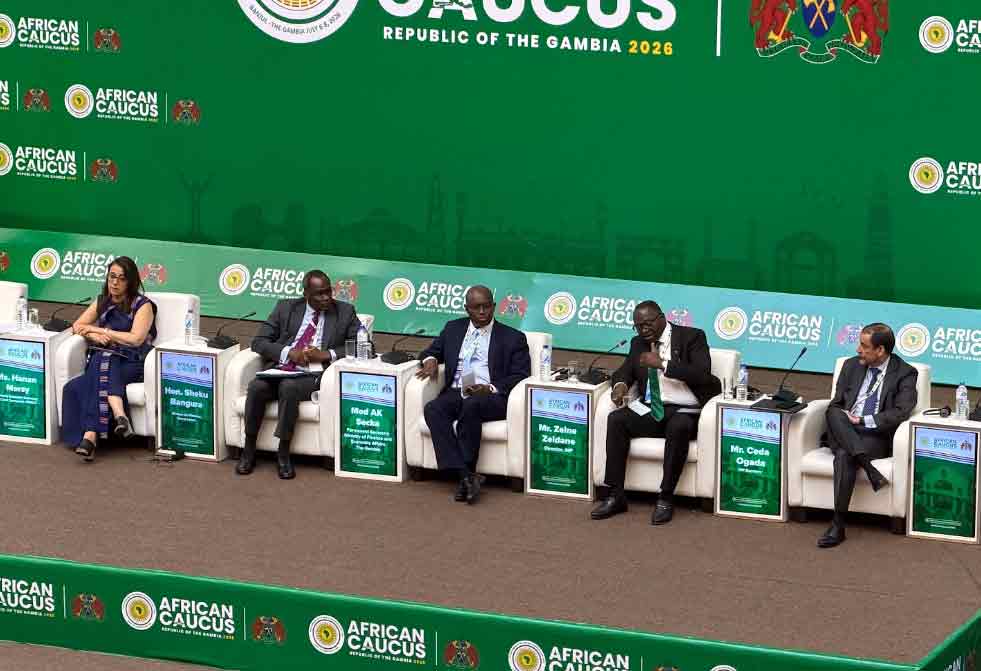
Institutional presentation by IMF representatives at the African Caucus in Banjul. African economies have weathered successive crises, but this adaptive capacity must now translate into increased production, industrialisation and employment, according to IMF experts. This message was delivered by Hanan Morsy, Deputy Executive Secretary and Chief Economist of the United Nations Economic Commission for Africa, during an institutional presentation of the International Monetary Fund, organised on the sidelines of the African Caucus in Banjul, Gambia, last week. According to her, the resilience demonstrated by the continent does not, in itself, constitute economic transformation. African countries have indeed weathered major shocks, ranging from the Covid-19 pandemic to the war in Ukraine, including rising interest rates and trade tensions. But for Hanan Morsy, resisting crises is insufficient if this resilience does not increase productive capacities, develop industrialisation and create quality jobs. She thus called for a paradigm shift. Africa should no longer limit itself to exporting raw natural resources, but develop regional value chains, invest in green industrialisation and integrate emerging technologies. The continent must, according to her, become a producer of solutions and not remain merely a consumer of technologies. Hanan Morsy also emphasised accelerating the African Continental Free Trade Area, strengthening fiscal institutions, broadening tax bases and improving public expenditure governance. She also called for reducing the gap between African risk perception and the continent's economic realities. For his part, IMF Director Zeine Zeidane indicated that sub-Saharan Africa remains one of the most dynamic regions in the world, with regional growth estimated at around 4.3%. Prospects nevertheless remain fragile due to rising energy and fertiliser prices, international tensions and tightening financial conditions. Sierra Leone's Finance Minister, Sheku Bangura, for his part, stressed the importance of preserving macroeconomic stability while protecting priority spending in health, education and infrastructure. For Madagascar, these guidelines recall the need to combine resilience, productive transformation and protection of essential investments, in a context marked by climate shocks, budgetary constraints and import dependence.
Source: Midi Madagasikara