Domestic
Constitutional Court Rejects Automatic Revocation of Convicted Judges
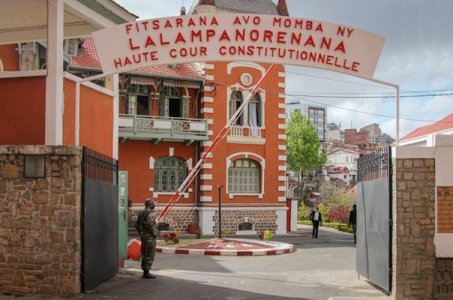
The Constitutional Court (HCC) has struck down one of the most controversial provisions of the judicial status reform. In its decision handed down on July 8, the constitutional court declared unconstitutional the article providing for automatic revocation of judges definitively convicted of corruption or certain criminal offenses, ruling that such a mechanism violates fundamental principles governing judicial disciplinary power. The text adopted by the National Assembly stipulated that a judge definitively convicted of corruption, related offenses, or sentenced to an afflictive or infamous punishment must be automatically struck from the judiciary without any possibility of exception. While the HCC acknowledges that fighting corruption is a legitimate objective, it considers that this imperative cannot justify an automatic sanction depriving the Superior Council of the Judiciary (CSM) of its constitutional role. For the High Counselors, the Constitution exclusively entrusts the Superior Council of the Judiciary with the power to determine disciplinary sanctions applicable to judges. By imposing systematic revocation upon a criminal conviction becoming final, the legislature strips the CSM of any ability to evaluate circumstances specific to each case, including the gravity of facts, the judge's seniority, or prior conduct. Such automaticity amounts to an accessory penalty substituting for the disciplinary power of the competent body. The HCC also emphasizes that this provision undermines the principle of rights of defense. Even if the judge is heard before the Superior Council of the Judiciary, it has no margin of decision since the sanction is already imposed by law. Adversarial debate becomes meaningless, incompatible with constitutional guarantees. For these reasons, the final paragraph of Article 56 was declared unconstitutional and must be removed before promulgation. Beyond this censure, the High Court validated the bulk of the reform while formulating several interpretive reservations. It notably clarified rules applicable to judges running for elected office, recalled that instructions to prosecutors can never be manifestly illegal, required stricter definition of evaluation criteria for sitting judges, and struck down a provision delegating to regulatory authority the setting of restrictions on judicial access. However, the rejection of automatic revocation constitutes the principal modification made by the HCC to this overhaul of judicial status, reaffirming the central role of the Superior Council of the Judiciary in exercising disciplinary power.
Source: Madagascar Tribune