Domestic
Terror grips Antananarivo despite massive police deployment
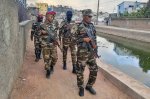
Terror is ravaging Antananarivo. Within hours, several deeply troubling incidents have intensified the climate of insecurity gripping the capital. A man missing for three days was found dead at the morgue of the Joseph Ravoahangy Andrianavalona University Hospital (HJRA). On the same day, a man aged between 40 and 50 was reportedly abducted in broad daylight in Ankadivato by hooded individuals in a tinted-window 4x4 vehicle without license plates. Meanwhile, in Ankazomanga, a man suspected of attempting to abduct someone was violently attacked by a crowd before being arrested by police. According to witnesses, perfume bottles and a firearm were found in his possession. Adding to these events is the chilling testimony of a young woman widely shared on social media. She claims she narrowly escaped what she describes as a possible abduction attempt. In the Antanimora sector, while helping a woman who tapped her shoulder in thanks, she nearly lost consciousness. She approached a nearby parked 4x4, but after praying mentally, she regained awareness and managed to turn back. After running for about a minute, she saw the vehicle had already left. Though unconfirmed officially, this account deepens fears among a population already traumatized by successive disappearances, abductions, and gruesome discoveries. These incidents occur despite the Head of State, Prime Minister, and security ministers recently announcing a vast operation to curb the surge in abductions, disappearances, and murders. Hundreds of police and gendarmes have been deployed in capital neighborhoods day and night, with authorities announcing progressive reinforcement potentially reaching a thousand agents. Yet crimes continue multiplying. Abductors appear capable of acting in broad daylight, sometimes in busy areas, seemingly undeterred by announced security presence. This raises critical questions: How do such acts continue despite massive police deployment? Are implemented measures truly effective? Do perpetrators benefit from complicity or protection enabling such audacity? Meanwhile, one reality prevails: fear has become daily life for many Malagasy. In Antananarivo and other localities, going out alone, letting children travel, or simply returning home after dark has become a constant source of anguish. Each new disappearance, suspected abduction, or discovered body fuels growing insecurity. Facing this alarming spiral, the population now demands concrete results. Beyond announcements and reinforcements, criminal acts continue, for now, to impose their law.
Source: Madagascar Tribune