Culture
Furrows of the Past – The MDRM Trial: Colonial Justice's Effort to Close Political Debate
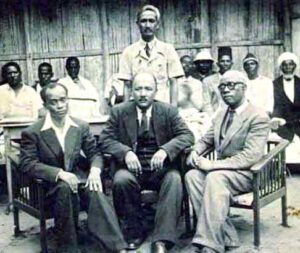
On July 11, 1948, one of the most emblematic trials in Malagasy colonial history began in Antananarivo. On the defendants' bench sat Malagasy parliamentarians and leaders of the MDRM (Malagasy Democratic Movement for Renewal), arrested following the 1947 uprising. The colonial administration presented this case as a trial intended to establish responsibilities in the revolt, but for many historians, it remains a symbol of justice deeply subordinated to the political imperatives of the era. We are witnessing an exceptionally violent repression. The March 1947 uprising led French authorities to launch a vast military campaign whose victims, according to historians' estimates, numbered in the tens of thousands. At the same time, it became vital for colonial power to prove the existence of a link between the armed insurrection and the main legal nationalist movement, the MDRM, which had until then pursued a parliamentary strategy. The trial opened in an atmosphere of serious concerns about fundamental guarantees of defense. All Malagasy lawyers declined to participate in a process they deemed devoid of the criteria of a fair trial. Ultimately, only two lawyers from France, Me Stibbe and Me Douzon, volunteered to defend the accused, despite intense pressure and threats, including assassination attempts. This trial, beyond the verdicts, exposes a contradiction inherent to colonial systems. When a population demands more rights through legal means, but these demands are judged politically intolerable, the judicial domain can evolve to become an extension of political power dynamics. The courtroom ceases to be merely a place where justice is rendered; it transforms into a terrain where the legitimacy of an established order is contested. In retrospect, the MDRM trial appears to represent the judicial conclusion of the uprising rather than one of the last grand gestures of French colonial authority in Madagascar. The victory of independence, obtained twelve years later, could neither erase the scars of 1947 nor dispel the controversies that still surround this process today. It would primarily underscore that justice considered biased never succeeds in durably cementing a nation's divisions. July 11, 1948 remains a date that prompts reflection on the complex relationships between memory, justice, and power.
Source: Midi Madagasikara