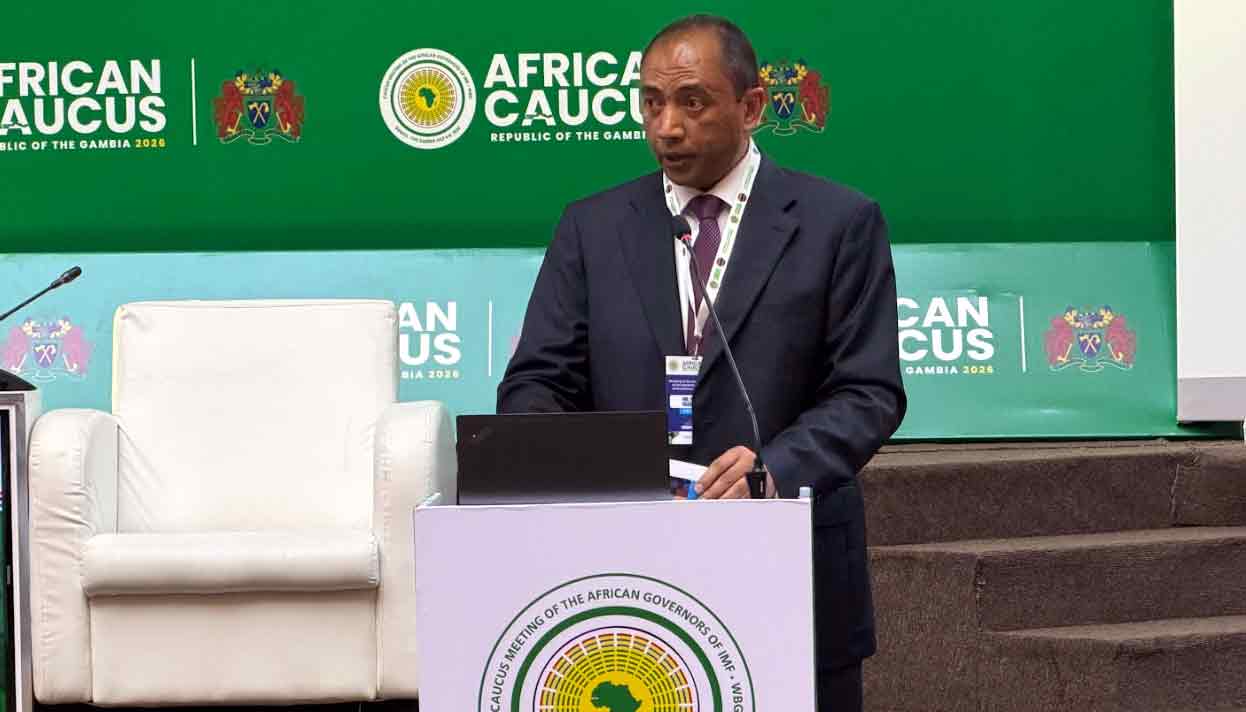
A high-level meeting focused on obstacles hindering intra-African trade and strategies to accelerate effective implementation of the African Continental Free Trade Area (AfCFTA) was organized as part of African Caucus 2026. Africa wants to trade more with itself. Yet between political ambition and ground reality, barriers remain numerous. This was addressed at the African Caucus in Banjul, Gambia, during a session attended by the Malagasy delegation led by Minister of Economy and Finance Dr Ramiarison Herinjatovo Aimé. Under the theme "Breaking Barriers, Boosting Trade," discussions brought together representatives from international financial institutions, regional economic communities, the private sector, and African delegations participating in African Caucus 2026. Exchanges highlighted the weight of non-tariff barriers, customs delays, complex administrative procedures, high logistics costs, and lack of standards harmonization. According to the World Bank Group, incomplete AfCFTA implementation could deprive the continent of considerable potential, with losses estimated at nearly 450 billion dollars.
Removing Barriers
The International Monetary Fund was represented by Ivohasina Razafimahefa, director of the IMF Regional Technical Assistance Center for Anglophone West Africa. His intervention holds particular interest for Madagascar due to his Malagasy origin. He recalled that intra-African trade remains limited despite slight progress over the past twenty-five years. Intra-African exports rose from approximately 13% to nearly 15%, while African exports to the rest of the world remain heavily dominated by raw materials. In his analysis, Razafimahefa emphasized that trade between African countries appears more diversified, confirming its potential for industrialization, upgrading regional value chains, and job creation. According to estimates cited, significant reduction of tariffs and non-tariff barriers could substantially increase trade flows between African countries in coming years.
Concrete Tool
For Finance Ministries present at the event, the stakes are strategic. AfCFTA realization depends not solely on Commerce Ministries. It also depends on budgetary, fiscal, customs, regulatory, and investment policies. Transport infrastructure, energy, digitalization, economic corridors, and trade financing are among identified priorities. The Gambian Commerce Minister called for concrete actions so AfCFTA benefits are felt by businesses, particularly SMEs. From the private sector, TAF Africa Global's experience illustrated opportunities offered by regional integration, notably for enterprises from small markets. Through this meeting, Africa reaffirms a conviction: AfCFTA must no longer remain a mere continental agreement. It must become a concrete tool for competitiveness, investment, industrialization, and employment for African populations.
Economy
African Caucus 2026: Strong Push to Remove Trade Barriers Under AfCFTA
Source: Midi Madagasikara