Economy
AfDB President Calls for Greater Flexibility in Development Financing for Africa
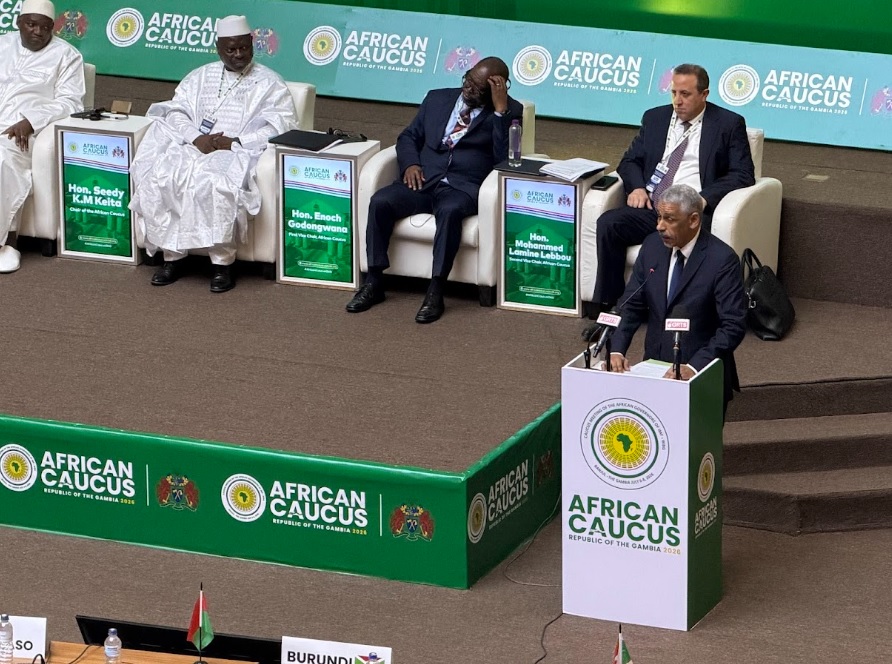
The president of the AfDB Group is calling on the IMF and World Bank to be more flexible in the face of crises affecting African countries. Africa can no longer be treated as if it were operating in a normal economic context. This is essentially the message delivered by Dr Sidi Ould Tah, president of the AfDB, during the African Caucus 2026, held in Banjul, Gambia. Before African governors at the International Monetary Fund and World Bank, the AfDB Group president called on the international financial community to provide support commensurate with the exceptional circumstances facing the continent. In recent years, Africa has been hit hard by a succession of major shocks: the Covid-19 pandemic, the consequences of the war in Ukraine, and tensions in the Middle East and the Gulf. These crises have weighed on public finances, increased import costs, worsened inflationary pressures, and reduced the budgetary margins of states. For Dr Sidi Ould Tah, the Bretton Woods institutions, particularly the IMF and World Bank, must take this reality into account in their support for African countries. The challenge is to enable states to continue their economic transformation efforts without being confined to overly rigid frameworks, at a time when social, climate, and infrastructure needs are exploding. Shocks to absorb. The case of Madagascar illustrates this increased vulnerability. In addition to global shocks, the island has also suffered two successive cyclones during this cyclone season. These climate events have caused significant human, material, and economic damage, increasing pressure on public finances and the population's recovery capacity. For a country already facing high infrastructure, energy, agriculture, education, and social protection needs, each natural disaster further reduces the space available for development investment. The AfDB's call thus aligns with a concern widely shared by African countries: obtaining more flexible, faster financing mechanisms better adapted to the continent's realities. It is not just about increasing financing volumes, but also about reviewing conditions, disbursement timelines, and instruments made available to states. In Banjul, Africa intends to speak with one voice. Faced with successive crises, the continent is calling for a more responsive financial partnership capable of supporting resilience, reconstruction, and structural transformation.
Source: Midi Madagasikara