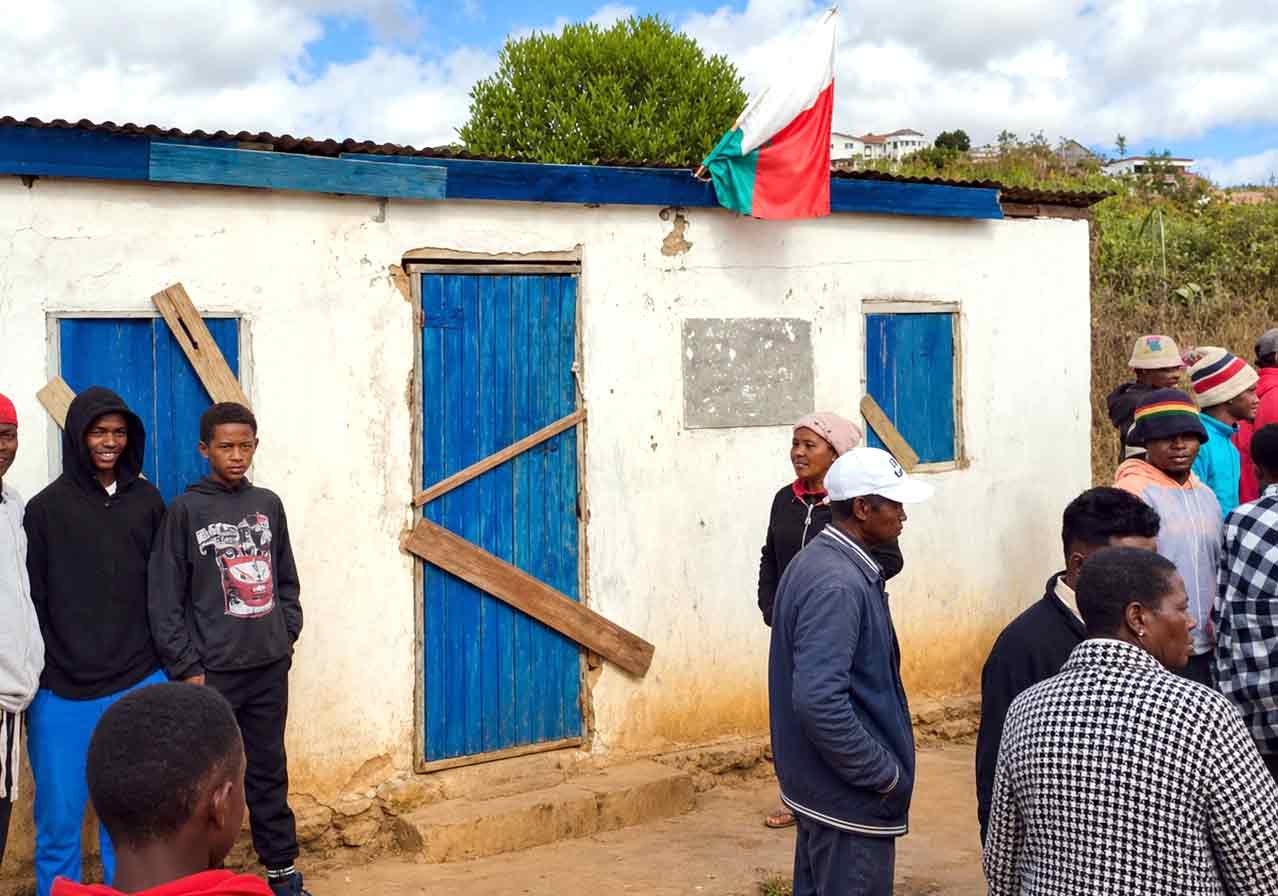
Protesters have barricaded the doors of the Fokontany office in Ambodizozoro (Ampitatafika). Although the contestations have not yet affected all 192 fokontany in the capital, grievances are beginning to resonate loudly across the City of a Thousand. A significant portion of the population remains fiercely opposed to the direct appointment of fokontany chiefs by the central government and is demanding democratic elections. As echoes of the 2025 uprising still reverberate, driven by a "Gen Z" calling for grassroots democratic renewal, the Executive is now facing the wrath of residents. By imposing direct appointment under the guise of awaiting the National Consultation, the central government has reignited tensions. In neighborhoods, resistance is organizing against this administrative choice. Consequently, for several days, Antananarivo and several localities across the island have been experiencing unprecedented turbulence, marked by growing discontent. Tensions are escalating. Just yesterday, several fokontany in the capital witnessed heated confrontations.
Administrative Power Play
At Morarano fokontany, the intention to remove the current neighborhood chief immediately sparked outrage. According to his deputy, residents are united behind their leader and are preparing major actions to express their disapproval of this "administrative power play." The situation is even more volatile in Tsaramasay, in the Third Arrondissement. Shock quickly turned to revolt when residents discovered that a supporter of the former president had been appointed outright. Yet the deputy and local inhabitants had proposed another candidate. Feeling completely ignored, residents refuse to allow this imposed chief to take office. Demanding immediate closure of the office, they are engaging in a prolonged standoff.
Unfair
In Antohomadinika Sud IVO III H, in the First Arrondissement, the situation remains equally explosive. Residents reject the replacement of their leader. According to them, the former chief had accomplished considerable work and remained very close to the population; his sudden removal is deemed deeply unfair. The newly appointed official counters with an official legal document, asserting that the leadership transfer was finalized on Saturday. The climate is no calmer in the periphery. In Ambodizozoro (Ampitatafika), protests have taken a dramatic turn: demonstrators have simply barricaded the office doors. Beyond the appointment, recurring land disputes within the fokontany are fueling anger. This legitimacy crisis is spreading, as areas like Andranonahoatra and major towns like Toamasina are experiencing the same turmoil.
Electoral Stakes
For a large portion of residents, there is no doubt this is a political maneuver ahead of upcoming elections. The stakes are high: everyone knows the highly strategic role these neighborhood chiefs play during voting. By entrusting these appointments to the Interior Ministry under direct authority of district chiefs, the executive is accused of abandoning administrative neutrality at the local level. For many, this is deliberate groundwork. Through an official note dated April 9, the ministry set the machinery in motion: prefects and district chiefs received firm instructions to install "fokontany committees." These basic structures will be headed by a chief and deputy appointed by state representatives. Beyond the method, it is the profile of the appointees that crystallizes anger. Labeled as "parachuted in," these officials appear from nowhere and do not even reside in the fokontany they are to lead. A flagrant lack of consideration for residents. "To avoid strikes, it would be better to let people elect whoever they wish to lead them," grumbles one resident. The message is clear.