Economy
General Agricultural Census: Updating Structural Data to Fill Statistical Gap
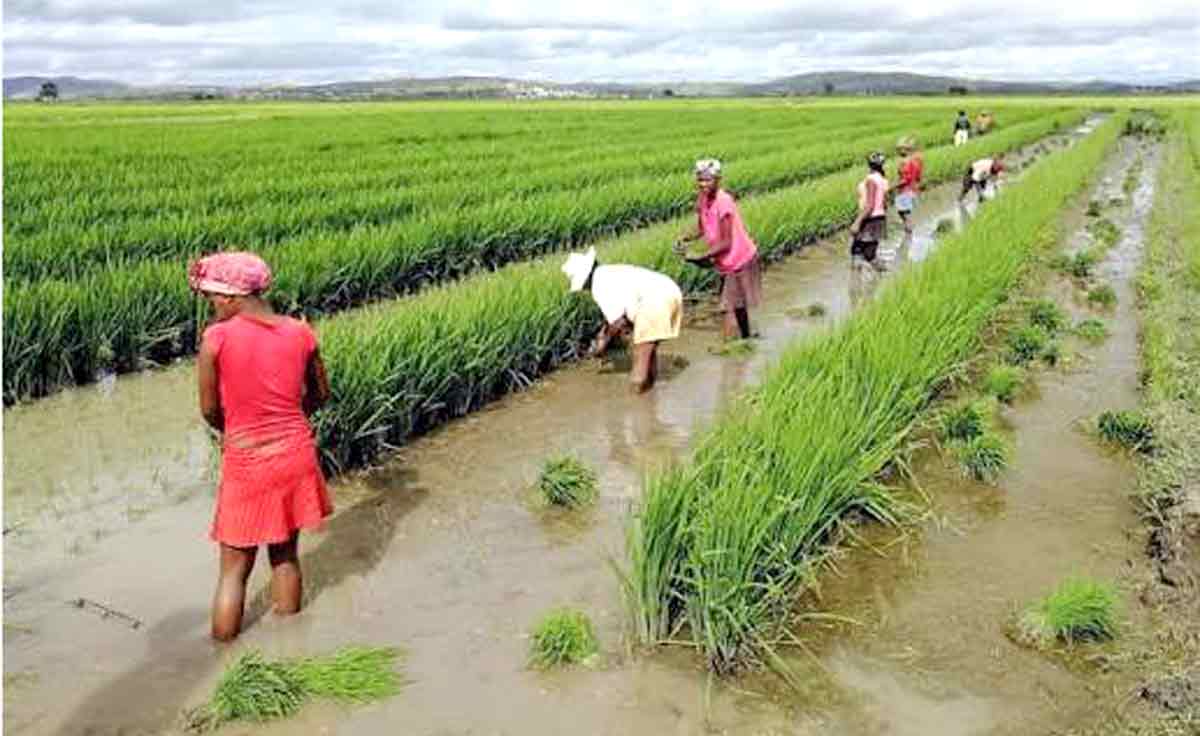
The 3rd General Agricultural Census (RGA-3) was officially launched yesterday at the Carlton Hotel by the Ministry of Agriculture and Food Sovereignty, in collaboration with INSTAT (National Institute of Statistics) and with technical support from the FAO. "The latest structural and comprehensive data concerning agriculture, livestock, fisheries and forestry sectors are outdated, dating back more than 20 years to 2004. An update of this data is necessary to fill a statistical gap. Indeed, this data update should be conducted every ten years according to international standards," said Auguste Ramanantsialonina, national coordinator of RGA-3, on this occasion. "These reliable, complete and updated statistical data will guide public policies on climate resilience, support for producers and investment in these sectors. A budget of 7 million USD, through the FSRP project under the Ministry of Agriculture and Food Sovereignty, and financed by the World Bank, is allocated to conduct this agricultural census at the national level," he added. First quarter 2027. Nearly 2,000 enumerators and supervisors are mobilized to collect data from rural households across Madagascar's 24 regions over a period of two and a half months. "The survey results from this 3rd General Agricultural Census should be published during the first quarter of 2027," said Joceline Solontompoharinony, RGA-3 team leader. Information to be collected includes demographic and economic characteristics of each household, its plots of land or in its possession, agricultural activities, use and access to inputs as well as productivity yields and types of agricultural mechanization. Regarding livestock, the number of herds, evolution of livestock entries and exits, animal health and nutrition as well as livestock management will be surveyed. Production, farm size and type of livestock will be studied for fisheries. Decision-making tool. Additionally, other information on access to financing, types of contracts between producers and companies as well as gender approach and integration into farmer organizations will also be collected during this census. Data on forestry operations are also included. "These new structural data will serve to measure the contribution of the agricultural sector to national GDP while identifying the number of active population in rural areas," emphasized Eric Jean Michel Rakotomanana, director general of INSTAT. For Ravelonjatovo Donatien, director of Information Systems, Statistics and Digitalization at the Ministry of Agriculture and Food Sovereignty, they constitute a decision-making tool for the State and all stakeholders.
Source: Midi Madagasikara