Domestic
Over 200,000 Jobs at Risk in Madagascar's Free Trade Zones
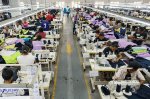
The Association of Free Trade Enterprises and Partners (GEFP) has raised alarm over the future of Madagascar's free trade zone regime. In a statement released on July 1st, the organization warns that over 200,000 direct jobs and the livelihoods of thousands of families are now threatened by evolving fiscal policies affecting the sector. The GEFP is calling on both Malagasy authorities and the International Monetary Fund (IMF), arguing that reforms implemented since 2023 are progressively undermining a system that has significantly contributed to the country's industrial development and exports. According to the statement, several new taxes, charges, and fiscal obligations have been introduced or strengthened through various finance laws adopted in recent years. The GEFP also highlights persistent delays in value-added tax (VAT) refunds, a situation placing severe strain on company finances. The organization explains that when companies wait months or even years for reimbursements while continuing to pay their obligations, they gradually reduce investments, limit hiring, and sometimes eliminate jobs or cease operations. The grouping emphasizes the social consequences of such developments. Behind the statistics, it notes, are thousands of employees, their families, and a vast network of economic activities directly or indirectly dependent on free trade zone enterprises. Transporters, restaurateurs, suppliers, craftspeople, landlords, and service providers would also be affected if these companies slowed production or disappeared. The GEFP recalls that Law No. 2007-037, adopted in 2008, guaranteed free trade enterprises a stable fiscal framework by stipulating that no new taxes or levies not provided for in this legislation could be added to the regime. According to the organization, this guarantee attracted investors and created thousands of jobs. However, it contends that successive finance laws have gradually altered this balance, creating uncertainty that discourages future investment. The organization clarifies it is not seeking preferential treatment. It states it accepts controls, measures against abuse, and sector cleanup initiatives. Instead, it demands that fiscal changes be discussed before implementation and that their employment impacts be properly evaluated. The statement also addresses the IMF's role. The GEFP acknowledges that budgetary decisions fall within Madagascar's state sovereignty, but believes new fiscal directions align with commitments negotiated with the international financial institution. According to the group, an approach focused solely on broadening the tax base fails to adequately account for the full economic benefits generated by free trade zone enterprises, including social contributions, indirect taxes, export revenues, and numerous indirect jobs. The grouping believes a comprehensive cost-benefit analysis of the regime should be made public before any irreversible decisions. It argues it would be contradictory to seek increased tax revenues by weakening a sector already contributing to wealth creation and employment.
Source: Madagascar Tribune