Domestic
Refoundation leaders reject SADC recommendations on political detainees and exiles
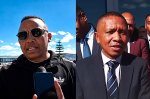
Madagascar's authorities have responded to recommendations made by the Southern African Development Community (SADC) following its extraordinary summit on Monday. The regional organization addressed the most sensitive issues of Madagascar's political crisis. Demands for the release of political detainees and the return of political exiles, following the fall of Andry Rajoelina's regime after popular demonstrations in September 2025 that brought Colonel Michaël Randrianirina to power, will apparently not be heeded. The president of the Refoundation, Colonel Michaël Randrianirina, who himself participated in the SADC extraordinary summit, responded upon returning from a few days in Morondava. He sought to provide "clarifications" on the question of political exiles. According to him, the persons concerned were never forced to leave Madagascar. "They fled on their own," he declared, stating they had "things to reproach themselves for." He added that they could freely return to the country, while recalling that prosecutions against persons suspected of embezzlement of public funds or plundering national wealth would continue. Colonel Michaël Randrianirina also affirmed that national consultation will be open to all Malagasy political sensibilities, in accordance with SADC recommendations. However, he specified that it will be reserved for persons recognized as Malagasy. This statement is widely interpreted as an allusion to former president Andry Rajoelina, whose Malagasy nationality is contested by current authorities. Prime Minister Mamitiana Rajaonarison also rejected SADC recommendations. Questioned during Madagascar's anti-corruption evaluation workshops at the Novotel Alarobia, he stated that "there are no political detainees in Madagascar." According to him, persons currently in detention are prosecuted for breaking the law, not for their political opinions. He also assured that Malagasy justice is independent and that the government does not intervene in judicial proceedings. The Ministry of Foreign Affairs subsequently published a statement to give its version of the summit's conclusions. According to Malagasy diplomacy, various SADC evaluation missions concluded that detained persons are prosecuted for common law offenses, not for political motives. The response also continued on the political front. The president of the National Assembly, Siteny Randrianasoloniaiko, relayed the official discourse on social media, also rejecting the existence of political detainees in Madagascar. Yet the notion of political prisoner is clearly defined by international human rights organizations. It concerns not only persons imprisoned for their opinions. It also includes prisoners of conscience, opponents arrested because of their political engagement or participation in demonstrations, as well as victims of arbitrary arrests. In this latter case, common law offenses are used to justify the incarceration of a figure deemed troublesome to those in power. This situation is regularly mentioned in several cases concerning opposition leaders in Madagascar. Facing these sensitive questions, which risk fueling further political debate, some Transition supporters are calling for Madagascar's withdrawal from SADC. Such an option appears difficult to implement. Former president Marc Ravalomanana recalled that Madagascar cannot do without the international community. According to him, the country needs its regional and international partners to support its economic development and preserve its diplomatic credibility. A position showing that, despite current disagreements with SADC, Madagascar remains closely tied to its regional and international partners.
Source: Madagascar Tribune