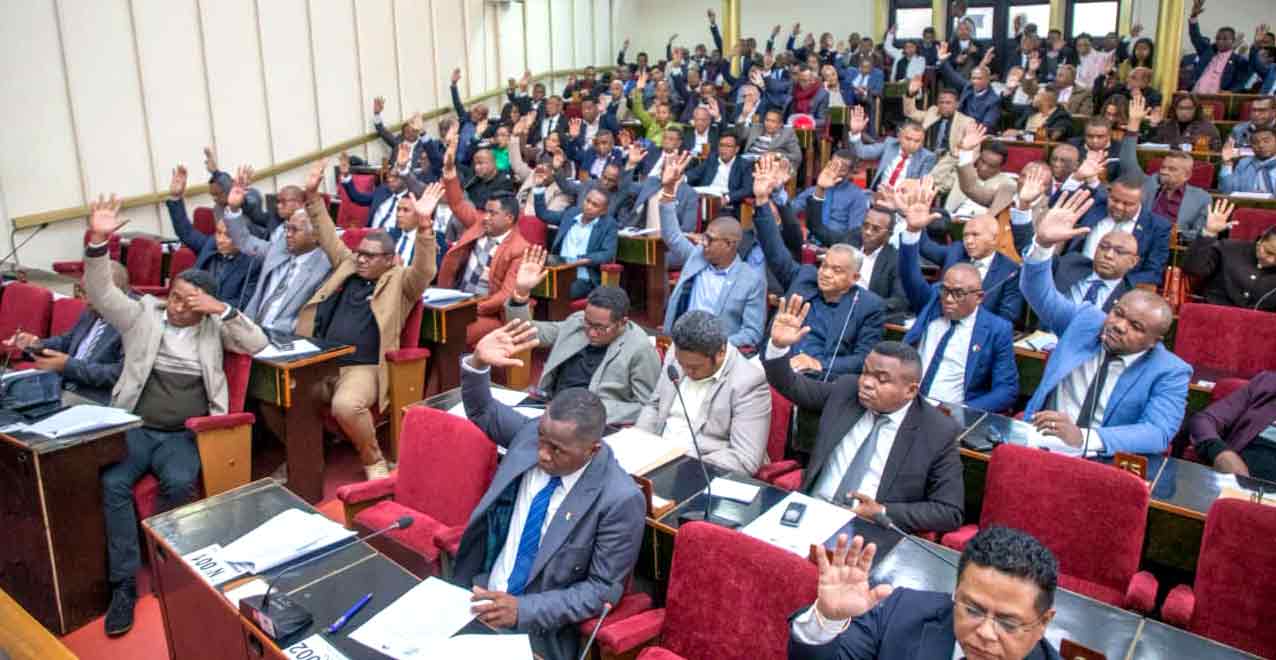
An extraordinary session has already been announced by the lower house president. On Friday, deputies will review their work and highlight laws adopted over the past two months. Lawmakers are preparing to close the ordinary parliamentary session without examining texts presented as essential to state reform. On Friday, July 3, the official closure of proceedings at Tsimbazaza will mark the end of the sixty days provided by the Constitution. While speeches of satisfaction and traditional reviews of accomplishments will be on the agenda, several major reforms will remain in the drawers. For several days now, elected officials have gradually left Tsimbazaza as national holiday festivities approach. Legislative work is practically complete, and their next major meeting will be the official closure this Friday.
But behind the closing ceremony lies a more embarrassing reality. Several bills never passed the parliamentary examination stage. The first major absence from the legislative calendar is bill no. 017/2025 on access to public information. Submitted to the National Assembly on May 28, this text was supposed to represent a major advance for administrative transparency and citizens' right to access information held by public institutions. Yet deputies preferred to postpone its examination without real public explanation. A reform announced as a pillar of state modernization is being postponed indefinitely. At Tsimbazaza, the text now seems destined for oblivion. Moreover, parliamentarians avoided opening debate on a measure that would have allowed lifting part of the veil on public administration operations. Facing this setback, government silence is equally intriguing. The Ministry of Communication and Culture remained silent on this parliamentary decision. A discretion that contrasts with numerous official speeches calling for institutional reform and more transparent governance. For several observers, this reluctance from deputies would not be unrelated to the executive's unwillingness to see a text enter into force that could impose greater openness in public affairs management.
Another reform left pending: amendments to the media communication law. Contrary to expectations, the project was never even placed on the parliamentary session agenda. Yet the preparatory process seemed well underway. For several months, regional consultations brought together journalists, media professionals, and communication actors to improve a law that had sparked considerable controversy upon adoption. A committee of specialists had been formed to develop a new, more consensual version better suited to sector realities. According to sources close to the matter, this amended version had already been transmitted to the Ministry of Communication and Culture. But the government ultimately never initiated the legislative process allowing its examination by deputies before session's end. This new postponement fuels questions about authorities' real willingness to implement regularly promised reforms. While official discourse multiplies references to "fanavaozana" and institutional transformation, emblematic texts of this ambition will ultimately remain absent from this ordinary session's legislative record.