Domestic
SADC Extraordinary Summit: Calls for Political Prisoner Release and End to Arbitrary Arrests
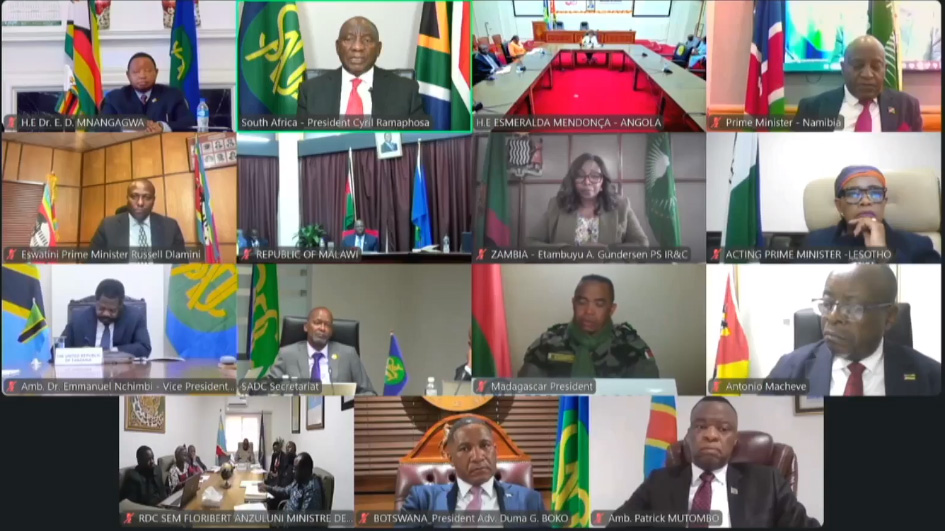
SADC leaders are now showing clear determination to closely monitor the process until a fully democratic constitutional order is restored. The Southern African Development Community (SADC) is tightening its grip. Meeting in an extraordinary summit by videoconference yesterday Monday under the presidency of South African head of state Cyril Ramaphosa, leaders of the regional organization sent an unambiguous message to Malagasy authorities. Inclusive reforms, return to constitutional order, liberation of political prisoners, end to arbitrary arrests and preparation of credible elections. The SADC roadmap is now clearly laid out. The final communiqué, published late Monday night, devotes significant space to Madagascar's political situation. Heads of state examined the report presented by Arthur Peter Mutharika, president of Malawi and president of the SADC Organ on Politics, Defence and Security Cooperation. This report follows two fact-finding and mediation missions conducted in Madagascar by former Malawian president Joyce Banda, member of the SADC Elders Committee, who conducted extensive consultations with political, religious and civil society actors to assess the crisis. Following these missions, SADC calls on the transitional government led by Colonel Michael Randrianirina to "respect the commitments made" in favor of "clear" reforms, accompanied by a precise timetable, transparent and open to all political and social forces. The organization also insists that these reforms be widely disseminated in national languages to ensure genuine popular participation and broad support for outcomes. SADC's current president, Cyril Ramaphosa, himself emphasized this point when closing the summit. "The success of national consultations and the reform process depends on the participation of all actors and all stakeholders," he declared, stressing that inclusivity is the essential condition for successful transition. Beyond institutional reforms, heads of state recall that their objective remains the restoration of constitutional order. The communiqué emphasizes that the transition process must lead to the installation of a democratically elected government, reflecting the will of the Malagasy people and respecting the principles of the rule of law. SADC also insists on the necessity of political dialogue without exclusion. The organization encourages the continuation of a national reconciliation process and consultations throughout the transition period. It invites the government, the Council of Christian Churches and all stakeholders to act impartially, in respect of the Constitution, in order to seek national consensus. The communiqué also contains an important section devoted to political rights and freedoms. Regional leaders explicitly demand the liberation of political prisoners, the halt of arbitrary arrests targeting opposition leaders and members of Generation Z, and the return to the country of political exiles. SADC is strengthening its direct involvement in the Malagasy process. The summit decided to expand the mandate of the Elders Committee so that it accompanies not only national reconciliation efforts, but also electoral reform and preparations for the future constitutional referendum and legislative elections. At the same time, heads of state approved the opening of a permanent SADC liaison office in Antananarivo, tasked with coordinating all of the organization's support actions during the transition.
Source: Midi Madagasikara