Politics
Radoniaina Rakotoranto: "True sovereignty means saying no when risks aren't managed"
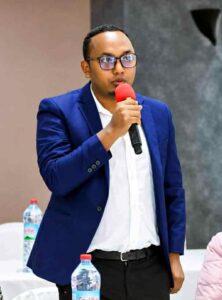
Young economist and environmentalist Radoniaina Rakotoranto. Madagascar is caught in a false debate between protection and mining exploitation. For economist and environmentalist Radoniaina Rakotoranto, the urgent priority is building strong governance to transform resources into sustainable wealth. Midi Madagasikara (M.M.): How do you analyze the current mining debate? Radoniaina Rakotoranto (R.R.): The debate is now hijacked by politics and emotion, at the expense of technical analysis. Whenever a foreign investor appears, the same reflexes emerge: selling the nation, squandering assets, betrayal. Defending sovereignty and the environment is legitimate. But it too often tips into nationalist and xenophobic discourse, preventing us from examining the substance: contract quality, revenue sharing, environmental impacts, and the state's real capacity to control. That's where the major political stakes lie. Our recent history shows that resource issues, when instrumentalized, become destabilizing factors. Yet Madagascar has competent experts—mining law, geology, environmental economics, impact studies—who stay silent for fear of being called "mpivarotra tanindrazana." We must reopen space where one can defend conditional exploitation without being a traitor, and oppose it without being an enemy of development. M.M.: Should radioactivity concerns around Base Toliara lead to rejecting the mining project? R.R.: It's a risk and potential public health impact that must never be minimized. But technically, we must distinguish between the existence of a risk or impact and our ability to manage it. What exposure level? Which populations are affected? What standards? Who controls the data? Who bears consequences if there's a leak? The question isn't just: is there a risk or impact? But are we truly capable of managing it? If, after independent expertise, the answer is no, the state must have the political strength to say no. That's sovereignty: not refusing on principle, but knowing when to refuse when truly necessary. M.M.: Where should the real debate focus? R.R.: On opportunity cost and how the revenue is used. What do we gain with the status quo without mining? Is the mine the best use of this territory compared to other economic uses: agriculture, tourism, fishing, or conservation? A project isn't compared to nothing—it's compared to other sustainable development paths. Then comes the most political question: what does the state do with the revenue? Even with a good contract, if receipts finance current spending, the population won't benefit. The challenge is transforming exhaustible natural capital into sustainable capital: human capital—education, health, training—and productive capital—roads, energy, irrigation, digital infrastructure. Only then can mining contribute to reducing our external dependence and truly launching Madagascar's development process. M.M.: What's the geopolitical dimension? R.R.: It's become central. In a world of strategic resource rivalries, Madagascar must not remain a mere extraction territory. Our sovereignty won't be measured by the number of investors rejected, but by our capacity to negotiate, maximize locally created value, develop skills, and diversify partners. This requires three political conditions: total transparency on contracts and revenues, solid institutions and independent oversight, and long-term vision escaping electoral myopia. Otherwise, we repeat the Malagasy cycle: overthrowing power in the people's name, squandering or blocking, and missing transformation. We must escape the false dilemma: exploit or protect. The real question is: do we have governance capable of converting our collective heritage into development for today and future generations? Collected by Julien R.
Source: Midi Madagasikara