Training sessions have always been welcomed with enthusiasm. To address structural, technical, and socio-economic challenges in Madagascar's civil registry system, the Ministry of Interior and Decentralization is intensifying training for territorial actors. Led by INDDL with strategic support from OIF, this harmonization drive has already yielded results in thirteen regions. Following the Implementation Program of the State's General Policy for Refoundation, Madagascar is taking a decisive step. Administrative modernization is no longer mere ambition but a comprehensive strategy centered on universal and free civil registry registration. By bringing services closer to citizens at the fokontany level, the country is betting on digitalization, simplified procedures, and service interoperability. This bold vision aligns perfectly with the African Union's Agenda 2063 and Sustainable Development Goal 16.9, which affirms the fundamental right to legal identity for every citizen.
Cooperation
At the heart of this administrative transformation, the National Institute for Decentralization and Local Development (INDDL) plays a driving role. Attached to the Ministry of Interior and shaped by successive reforms since its creation by May 2011 decree and reorganization in March 2018, this body leads capacity-building for territorial agents with firm rigor. Since 2021, this momentum has benefited from valuable strategic support from the International Organization of Francophonie (OIF). This fruitful cooperation has equipped the country with essential reference tools, including management circulars and national trainer manuals, ensuring procedure harmonization and legal security of documents.
Thirteen Regions
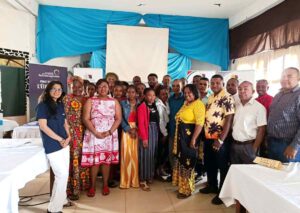
After extending its proven actions across thirteen regions, the momentum continues with a clear roadmap. INDDL aims to sustain these achievements through intensive training sessions. For 2026, five regions benefited: Fitovinany, Diana, Ihorombe, Alaotra-Mangoro, and Boeny, which closed the 2026 training cycle. In total, 380 key actors across 12 districts and 184 communes benefited from these capacity-building programs, spread over three days per site. Distribution shows balanced coverage: 64 participants in Alaotra-Mangoro for 31 communes, 140 in Fitovinany across 69 communes, 52 in Ihorombe for 25 communes, 50 in Diana within 24 communes, and 74 in Boeny through 35 communes. Sessions brought together municipal civil registry officers and secretaries, supported by district officials for sustained local follow-up.
Beyond Routine Toward Operational Excellence
Beyond simple technical upgrading, these training sessions represent a genuine cultural turning point for practitioners. Civil registry officers and secretaries have the opportunity to step back from daily tasks to consolidate mastery of essential missions. Through interactive workshops, concrete case studies, and rich experience exchanges, participants sharpen their rigor in document preparation, secure archiving, and personal data protection. Improving reception quality and careful preparation for future biometric enrollment of the population rank among top pedagogical priorities. These exchange spaces foster networking and best practice sharing among field professionals.
Toward Transparent and Inclusive Local Administration
Ultimately, all these convergent efforts aim to durably transform public service delivery to users. Better equipped technically and fully aware of the societal impact of their commitment, agents return to their posts with renewed resources and strengthened confidence. They now embody a more efficient administration, capable of responding swiftly, clearly, and effectively to citizens' legitimate expectations. Protecting the rights of every Malagasy child, ensuring transparency, and building solid foundations for modern citizenship are no longer mere aspirations but daily reality.
Domestic
Civil Registry Reform: Madagascar Pursues Deep Administrative Modernization
Source: Midi Madagasikara