Domestic
Amoronankona: Private Interests vs. Public Good
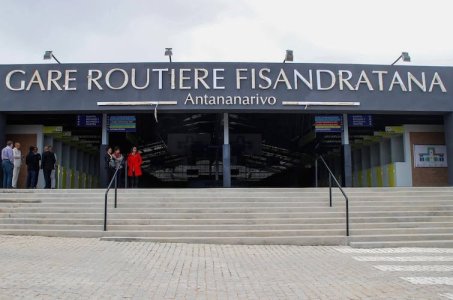
The resistance of operators to relocating the bus station from Fasan'ny Karana to Amoronankona illustrates how complex development issues can be. To ease traffic congestion in the capital, the State decided to transfer the bus station to this side of the city, while capitalizing on investment in the new bus station built during Hery Rajaonarimampianina's presidency, which had been curiously ignored by Rajoelina during his tenure. Meanwhile, those who have used the precarious facilities at Fasan'ny Karana for decades refuse to move, citing various reasons that are not entirely without merit. For example, an entire network of direct and indirect economic activities has developed around this station and provides livelihoods for hundreds of families. Moving the station means these people will lose their means of subsistence, unless effective support measures are offered to help them relocate to Amoronankona. But this bus station story is just one example among many. The Vara Mada case in Toliara is another. A project meant to bring thousands of jobs and revenue to a neglected region is being fought for reasons that, again, are not entirely illegitimate. In the capital, the municipality has repeatedly had to abandon measures aimed at enforcing the law, whether in market management, taxation, or traffic organization. The Tanamasoandro new city project encountered resistance from rice field owners facing expropriation, even though the idea had rational merit for decongesting Antananarivo, despite being championed by Andry Rajoelina. Similarly, various projects to relocate the saturated Andralanitra landfill to areas on the periphery of Antananarivo face refusal from local populations. Each reform effort that disrupts the habits or interests of a minority too often results in the majority's interest being sacrificed. The populism of leaders makes them reluctant to maintain unpopular measures, fearing protests or loss of legitimacy as elections approach. Some local or national political officials work behind the scenes to incite the masses and push them toward contestation to turn multinationals into cash cows, openly or covertly. Since their inception, the histories of Rio Tinto and Ambatovy are filled with examples of strikes, pressure, and intimidation from those with the power to wield it. However, a reform or development project cannot claim to serve the general interest if it imposes all its costs on a minority without consultation, compensation, or support. One cannot deny legitimacy to transporters defending their economic activity, rice field owners defending their property, residents refusing landfill nuisances, populations affected by mining projects citing environmental consequences, or informal traders defending their livelihoods. Ultimately, initiatives aimed at improving development are most often opposed. Their initiators then retreat, perpetuating a guilty status quo that has persisted for decades. This situation fuels chaos, lack of civic responsibility, development delays, while cultivating a rebellious spirit detrimental to restoring law and order. Speaking of Refoundation in such a context is illusory. In this opposition of operators to their transfer to Amoronankona, there is however an amusing phenomenon: former unionist Herizo Andrianavalona finds himself managing a strike as a minister, with extremist language and behavior excesses among protesters and law enforcement. Karma is a bitch.
Source: Madagascar Tribune