Domestic
"Madagascar Vision 2030": Where Do We Stand?
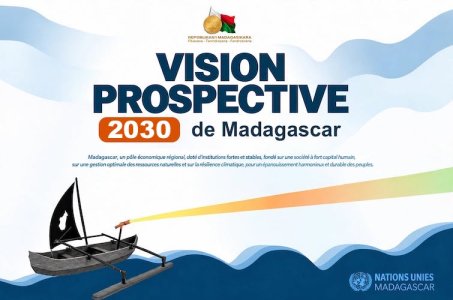
Exactly 30 years ago in 1996, the United Nations Development Programme brought together Malagasy intellectuals for an exercise called National Long Term Perspective Studies (NLTPS) - "Madagascar Vision 2030". The goal was to reflect on different possible scenarios for Madagascar by this reference year. What follows is extracted from a synthesis document published on the website of the Moroccan Royal Institute for Strategic Studies. It is both surprising and sad that no version of such an important and interesting text is available on a Malagasy website. It is therefore unsurprising that it has been forgotten. This excerpt is provided without commentary from us, so that each person can objectively assess the quality of the vision expressed 30 years ago by this group of intellectuals, and determine which of the three scenarios is closest to today's reality, four years before the 2030 horizon. "The cruise ship scenario" describes the peaceful voyage of a united people, on a sturdy vessel and on calm seas. The three stages of this journey are described without conviction: revival of popular enthusiasm and institutional reconstruction attracting foreign investors (1996-2000), then consolidation of growth foundations (2001-2010), and finally Madagascar's rise to regional power status (2010-2030). The "dhow" scenario describes the fate of a divided crew, on a dilapidated vessel, on rough seas. Between 1996 and 2001, the country fails to establish democratic institutions, the weight of its debt crushes it, the "social fracture" intensifies, the degradation of rural and urban environments, the explosion of the informal sector and demographic growth, impoverish the Malagasy people. Famines trigger social unrest. This scenario is described with more conviction than the previous one. An obscure foreign ghost ship eventually takes the dhow in tow and recreates in Madagascar the age of trading posts; foreign investors exploit natural resources or develop sex tourism or drug trafficking. "The Malagasy has lost his identity and pride". The schooner scenario is built on assumptions of "good governance" and a relatively disturbed international environment. Popular enthusiasm, patriotism of leaders finally reconciled and economic liberalism compensate for the fact that globalization accentuates the country's handicaps. Necessary reforms are completed by 2001.
Source: Madagascar Tribune