Society
Secondary Education: Alarming Decline in Science Options at High School
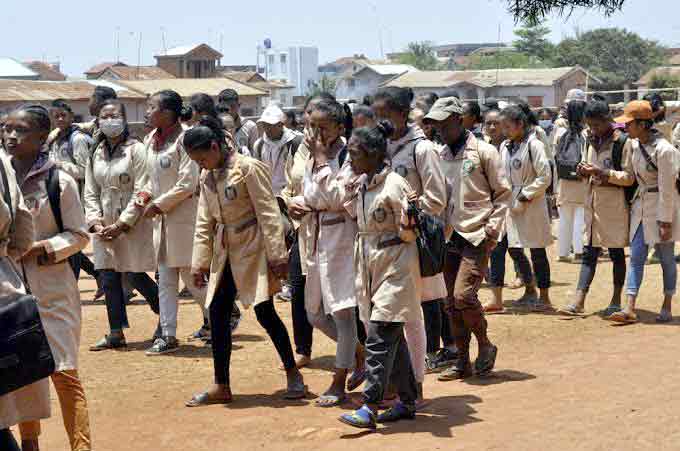
The decline of science options in Madagascar's secondary education system is a worrying reality already highlighted by high school science teachers. According to statistics, the proportion of students enrolled in science streams continues to fall. In 2025, the proportion of students enrolled in science streams at the baccalaureate stood at around 18.7%. This percentage shows a decline compared to the previous four years: 20% in 2023 and 2024; 20.35% in 2022 and 22.28% in 2021. Among the main causes of this continuous decline is the shortage and lack of qualifications among a significant portion of teachers. Indeed, Madagascar's education system is critically lacking qualified teachers, particularly in science and technical subjects. Furthermore, the lack of infrastructure and equipment, particularly in public high schools, is hindering the development of science education and dampening student performance and enthusiasm for learning these subjects. Science education requires practical work as well as the availability of laboratories and digital tools. Yet these basic facilities are critically lacking in the vast majority of high schools where already overcrowded classrooms limit the possibilities for more individualized student learning. There is also a perception of difficulty in science streams. In Series C, where mathematics and physics form the foundation, this path is perceived by students as difficult and inaccessible. It is, however, considered more prestigious because the few students who choose Series C and succeed with honors at the baccalaureate are regarded as elites. Madagascar's education system modernization initiative includes the elimination of the traditional series A, C and D in general baccalaureate education and their replacement with three new series L, S and OSE (Organization, Society, Economy). Currently at the center of controversy and facing strong opposition, particularly from private education calling for more support measures, this change remains in place for now.
Source: Midi Madagasikara