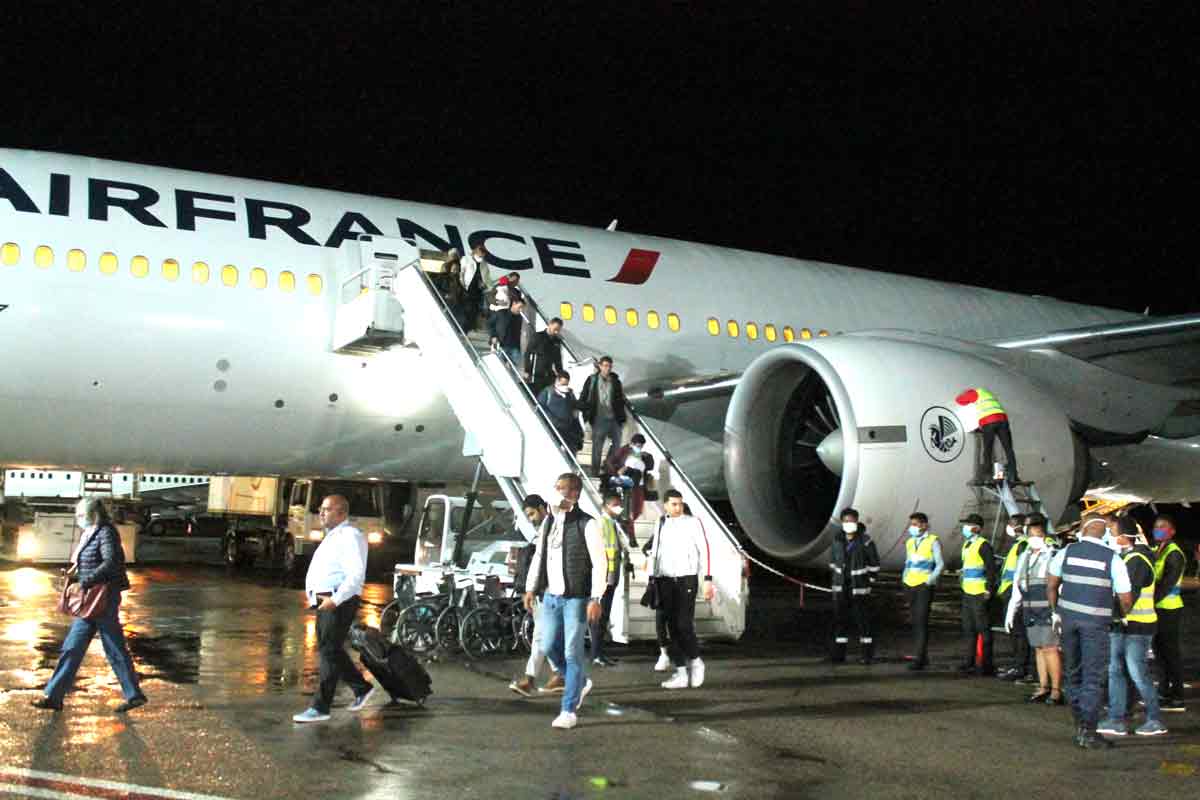
Overtime allowances are paid by the companies requesting services. The issue of allowances paid to civil servants working outside normal hours at international airports has returned to the spotlight. During his intervention at Ivato on the matter of illicit gold bullion exports, President of the Republic Michaël Randrianirina notably discussed the allowances granted to civil servants performing overtime work at airports, noting that this amount was particularly low.
Overtime Work
In fact, this disputed rate is not new. It is set by interministerial decree no. 12.134/2010 of May 19, 2010, concerning "the fixing of overtime allowances for civil servants working at Madagascar's international airports." In article 4, this decree stipulates that "gross allowances due are established according to a single hourly rate of 1,500 ariary per hour." In summary, the amount of 1,500 ariary corresponds to one hour of overtime work and not a flat sum paid for each intervention or flight. The text does provide for increases: for services performed between 10 p.m. and 5 a.m., the rate is increased by 50%. It is increased by 100% for public holidays and non-working days. The civil servants concerned by these allowances come from air and border police services, national gendarmerie at aerodromes, customs, border health, veterinary services, phytosanitary services, forestry, mining, and the Central Intelligence Service.
Airlines
Regarding payment of allowances, which are in fact linked to services requested by airlines, these companies pay them. Article 3 states that "services performed outside regular hours are considered overtime and are paid by the companies requesting services, according to the rates set by the decree." The calculation of allowances notably takes into account the programs actually carried out by the companies, the staff actually present, and the hourly rate set by article 4. Statements are then drawn up by the relevant services, submitted for approval by financial services, before collection from aircraft operators and payment to beneficiaries. In short, even though they are fixed and governed by interministerial decree, these allowances are paid neither by the State nor by the airport manager, but by the entities requesting services outside normal hours. "For any regular or non-regular flight, the amounts of allowances will be calculated by the beneficiary services and invoiced to the companies," specifies article 6 of the decree.
490 Ariary
In any case, the PRRM appears to be right about the low amount of this hourly rate of 1,500 ariary granted to civil servants. Dating from 2010, the scale has not changed in 16 years, while in the meantime, the cost of living has increased considerably. By combining Madagascar's annual inflation rates between 2010 and 2025, prices have multiplied by approximately 3 over the period. In other words, the 1,500 ariary paid today no longer has the purchasing power of approximately 490 ariary in 2010. In other words, to maintain a real value equivalent to that of 2010, the hourly rate should be close to 4,500 to 4,600 ariary today. In short, a revaluation is necessary, in the form of a decree, as required by the principle of parallel forms. A prerogative falling not to airlines, and even less to the airport manager, but to... the State.
Economy
International Airports: Hourly Rate of 1,500 Ariary for Overtime Work Set by Decree
Source: Midi Madagasikara