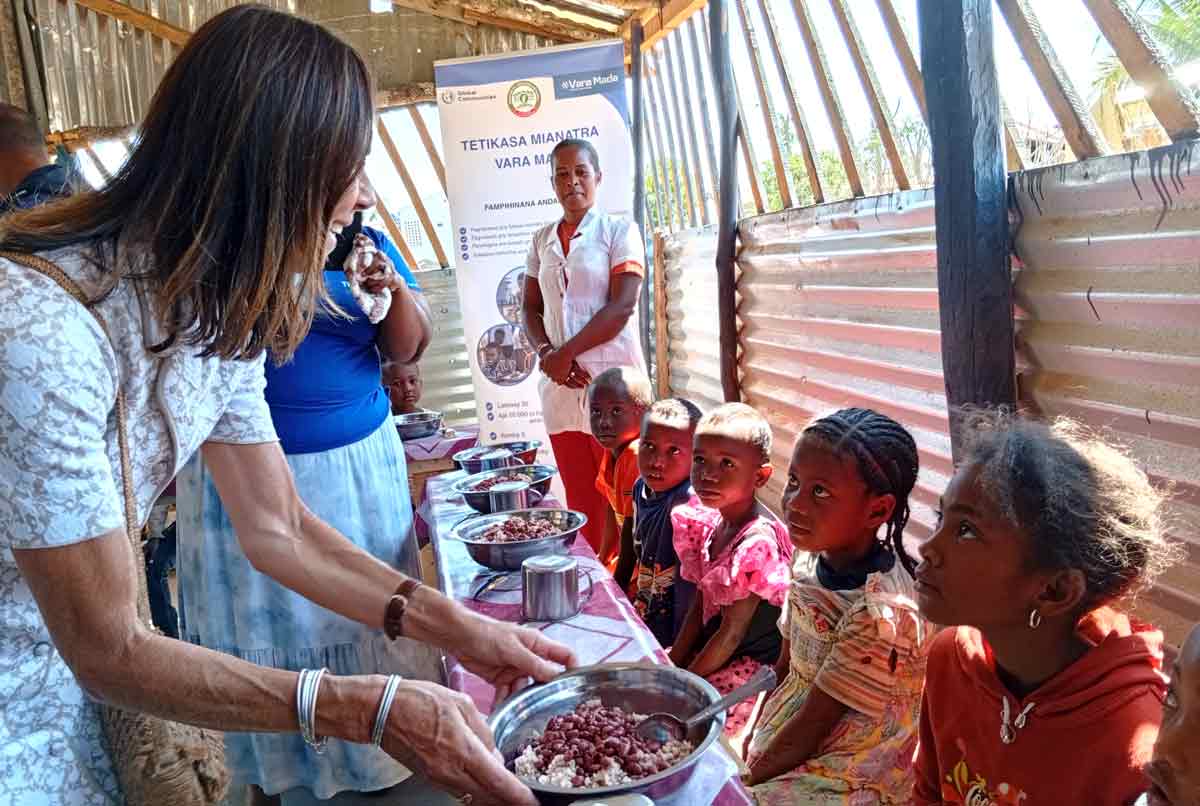
Virginie Bahon, director general in charge of community relations at Vara Mada, is highly motivated about this program. For Vara Mada, the first school canteen experience implemented under the Mianatra program is a success. Their names are Gino, Teco Cardo, Sambiny… Seated in front of their plates of rice and red beans in the refectory of EPP d'Ambohitsabo, these preschool children say they enjoyed the meal. Their smiles say the rest.
With and for the communities
On September 8th, this public primary school located in the urban municipality of Toliara I served the first meals of the Mianatra school canteen program. Just over 300 plates, with a menu compliant with nutritional standards set by the Ministry of National Education. The ceremony was honored by the presence of local authorities and leaders from Vara Mada and the NGO Global Communities. For Virginie Bahon, general director in charge of community relations at Vara Mada, the formula can be summed up in one sentence: Mianatra is built "with and for the communities."
The program covers 35 schools across five municipalities in the Southwest — Toliara I, Belalanda, Ankilimalinike, Tsianisiha and Maromiandra — serving approximately 10,000 students and nearly two million meals over the school year. Food supplies are purchased locally, and the program aims to eventually source directly from regional producers. The enterprise does not simply write a check. The setup is based on an agreement protocol with the Ministry of National Education, team training provided by the ministry's leading trainers, and most importantly, on the FEFFI, the community management structure of each school. A volunteer manager oversees the food store and daily inventory records. Five people ensure service each day. The number of students to be served is determined the day before. Communities contribute their share: water, firewood that children transport, the refectory, and volunteer work from management committees. This beneficial contribution gives the system its co-production character — and, according to its promoters, ensures its sustainability.
Entry point
Phillipe Lemay, country director of Global Communities, recalled that the organization has been operating this type of program in Androy since 2021. Over five years, approximately 160 schools have been covered and 25 million meals served. Beyond the meal, the canteen serves as an entry point for other interventions: nutrition, hygiene, and extracurricular activities. Each school develops an establishment plan contracted with the teaching staff and FEFFI. The canteen is certainly well received by parents, like Bernard Jean Claude, who stated: "This canteen reduces our expenses, strengthens security and reduces children's idleness." Véronique Vahinisoa assured, on behalf of mothers, that communities were ready to prepare meals. The interim regional director of National Education, Miandrisoa Girardin, recalled that school canteens are a globally recognized reality for improving school enrollment, before requesting expansion to other schools. The CISCO chief emphasized their incentive role in school retention: at Ambohitsabo, some students who had considered dropping out returned upon learning of the project's launch.
Another EPP in the municipality of Marmiandra in Toliara II also benefited from this Mianatra launch meal, which now continues daily with increasingly refined organization. In short, future prospects look quite good. Virginie Bahon indicated that the program could double to 70 schools — if the mining project materializes.