Culture
Madagascar: Seven New Diamond Frog Species Discovered
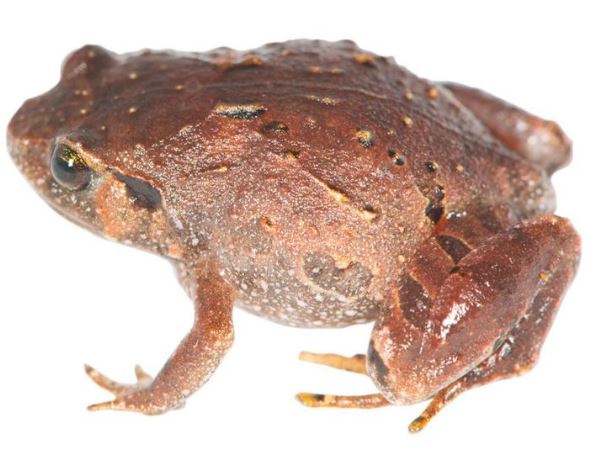
An international team of researchers has officially announced the discovery of seven new diamond frog species of the genus "Rhombophryne" in Madagascar, bringing the total known species of this group to 27. Published in the scientific journal "Vertebrate Zoology," this major taxonomic monograph was conducted over twelve years through close collaboration between European and Malagasy research institutions. The work was led by Dr. Mark D. Scherz, curator of herpetology at the Natural History Museum of Denmark, alongside scientists including Drs. Frank Glaw, Alice Petzold, Franco Andreone, Jörn Köhler, and Malagasy researcher Achille Raselimanana. To overcome historical confusion stemming from old specimen descriptions, the team employed "museomics," a cutting-edge technique involving DNA sequencing extracted from specimens preserved in museums for decades, combined with genetic analysis, song studies, external anatomy, and skeletal examination. Among the newly identified species are "Rhombophryne mavokely" and "Rhombophryne quentini." This major discovery continues Madagascar's long tradition of describing endemic amphibians, with numerous species identified in recent decades by these same research circles, including landmark work by Frank Glaw and Miguel Vences in the early 2010s, and the description of micro-frogs of the genera "Mini" and "Anilany" by Mark Scherz's team in 2016 and 2019. Beyond advancing knowledge of Malagasy biodiversity, these taxonomic data have direct conservation impact. During planning workshops in March 2026 linked to the national "Biodiversity 30×30" protection program, these new species maps directly supported projects to expand and strengthen protected areas against deforestation threats.
Source: Midi Madagasikara