Culture
Music: Papa James, One of Madagascar's Rock Souls
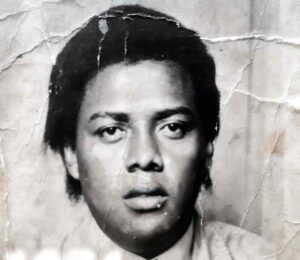
In 1974, young Mayoub Caid Jean Gaby Rakotonirina already had a determined gaze and dreams filling his head. A figure of Anosy's nights and architect of early urban groove, Papa James embodies the quest for affirmation of a postcolonial generation. Between frontal rock and melancholy, his music captures the seething soul of a Madagascar in transition. Papa James, born Mayoub Caid Jean Gaby Rakotonirina (1950-2026), possessed the aura of artists of his generation. Elusive, orchestral and above all endowed with an elegant sense of "full life," now lost through the Republics. To name but Ramy Franck, his elder, Dédesse, Henri Liban and others. Their common ground: frontal rock. "Beby adaladala" (1977, Discomad/ref: 467415) supports this claim. Although in the title, "madness" was an almost heretical subject in national civic morality. The fathers and grandfathers of his generation still carried the traumatic silence of colonial humiliation. A time of over-investment in rigor. Young Papa James, ahead of his time, handsome and seasoned musician, had the ambition to conquer the capital and its famous "Papillon" club. It survived into the 1990s. And it was there that his aura played greatly. Simply put, he did what he pleased and it filled nightclub dance floors. By interpreting Johnny Hallyday, singing in French was a way to carve out a place in the "modern world," embodied by nightlife and cosmopolitanism. And to conquer his place on nightclub bills. To the intimate affirmation of his Malagasy identity, he offered the national musical heritage immortal hits. Starting with "Marary ngôma" (1978/1979, Discomad/ref: 467 446), a musical mantra with this refrain: "Marary ngôma/ngôma tsy mahafaty," or "Painful is nostalgia/nostalgia does not kill." A flash of melancholy from a son far from his childhood lands, pain of a lover... On the dance floor, Papa James distilled the first urban groove, joined by "primitive" salegy. In the wake of 1970s "pop" afrobeat from "Prince Nico Mbarga & Rocafil Jazz," "Les Mangelepa," the binary pulse and hypotonic structure affirmed all his Malagasy identity. Music of carefree abandon, of decadence even, of excess too, no doubt. This youth, like that of the world, finally tasted true liberal pleasures. A fury for life unleashed in a between-two-worlds, beyond the seas and intangible roots. From then on, his orchestral aura takes on full meaning. A man of the orchestra, he honed polyphony to such technical levels. Between him and Jean Rakoto of The Smokers, on the title "Ramena" (1975/1976, Discomad/ref: 467 402) by the latter, the aesthetic distance is immense. This song exalted exoticism, luminous and smelled of iodine. Papa James succeeded in taking his frontal approach out of the North, while playing in the text. This last point is equally important. The popular dances of Boulevard Lyautey in Tuléar, the feverish evenings of 74 Rue Colbert in Diego-Suarez and the Papillon at the Hilton hotel cried "Malemilemy e" as one Malagasy. For the record, The Smokers could well be one of the patriarchs of psychedelic rock in Madagascar.
Source: Midi Madagasikara