Domestic
Khat: A Young Malagasy Researcher's Scientific Gamble
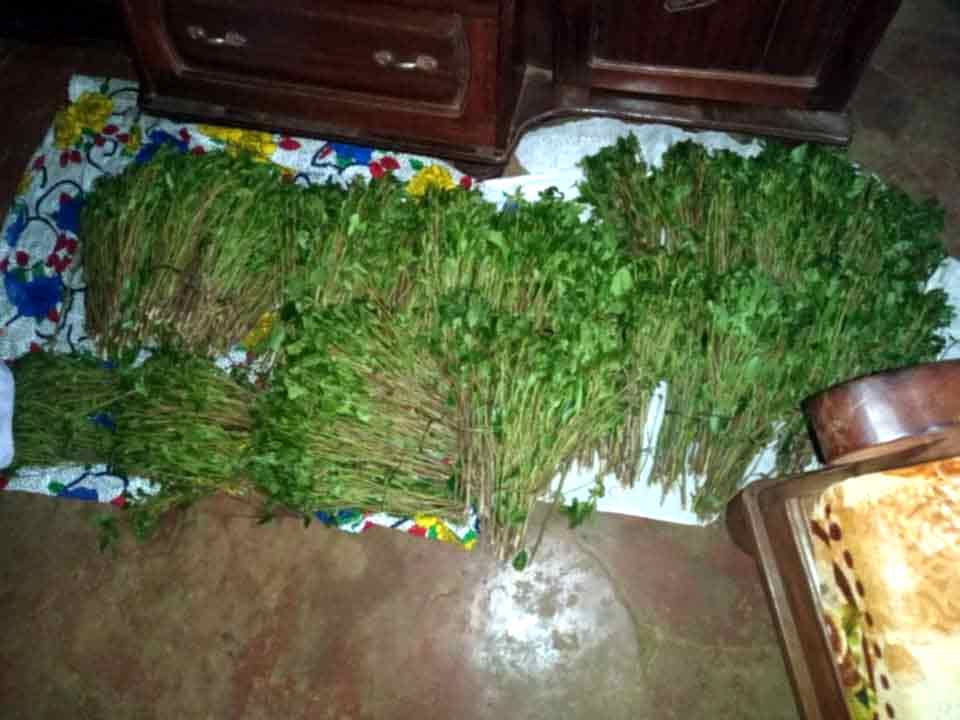
For a long time, khat remained a subject discussed in hushed tones. In Madagascar, it sparks passionate debates, sometimes hasty judgments, and numerous questions. Yet behind this plant lies an economic reality that shapes the daily lives of thousands of families in the country's north. Still, one had to be willing to go into the field to study it. This is precisely the gamble taken by Malagasy doctoral researcher Candicia Mahandrisoa Kotra, whose work has just been published in PLOS ONE, one of the world's most important scientific journals. Conducted in collaboration with Professor Lisa Gezon from the University of Alabama at Birmingham, a specialist in khat in Madagascar for over twenty years, this research brings a scientific perspective to a subject rarely addressed with field data. The study shows that the rural communes of Antsalaka and Joffre-Ville stand out for particularly dynamic economic activity thanks to khat production and trade. In these two communes, this sector represents far more than an agricultural crop: it constitutes a genuine source of wealth for many households and drives an entire local economy. But the results don't stop there. The research also highlights that this wealth could become a real lever for local development if accompanied by more effective governance. According to the researcher, local authorities would benefit from strengthening accountability in managing tax revenues from khat. For their part, producers and traders should be more encouraged to pay their taxes so this activity fully benefits communities through visible and useful public investments. The study also draws attention to another issue. The authors believe it is becoming necessary to better regulate young children's access to khat. Preserving economic activity must not prevent protecting future generations. One of the most revealing results concerns the comparison between income generated by khat trade and that from vegetable sales. Analyses show that khat sellers obtain significantly higher revenues. This finding helps explain why many traders are gradually abandoning market gardening for a more profitable activity. But this shift is not without consequences. As producers favor a more lucrative crop, land devoted to food crops decreases. For Candicia Mahandrisoa Kotra, this trend could eventually undermine the region's food security if no policy balancing cash crops and market gardening is implemented today. Beyond the results, this publication also tells the story of a young researcher who didn't choose the easy path. Working on khat meant entering a sensitive world where trust isn't gained in days. The surveys required lengthy discussions, listening, and much patience. More than once, field obstacles could have led to abandonment. Yet it was precisely this complexity that strengthened her determination. For her, a doctoral candidate cannot limit themselves to mastering theories or statistical methods. They must also learn to understand human realities, adapt to sometimes unpredictable contexts, and build dialogue with populations. Resilience thus becomes a scientific skill in its own right. This publication also illustrates the importance of international openness in research. Collaboration with the University of Alabama at Birmingham demonstrates that Malagasy researchers have a place in major scientific projects when they bring deep field knowledge, rigorous methodology, and genuine commitment to producing knowledge useful to society. By daring to work on a theme long little explored in Malagasy academic circles, Candicia Mahandrisoa Kotra ranks among the country's first researchers to bring the khat debate to major international scientific journals. Her objective was neither to defend nor condemn this sector, but to provide objective elements to inform public decisions. Through this journey, she sends a message to young researchers and young women. Research demands curiosity, work, and a permanent capacity to learn.
Source: Midi Madagasikara