Economy
Development Projects: Acceleration After Years of Accumulated Delays
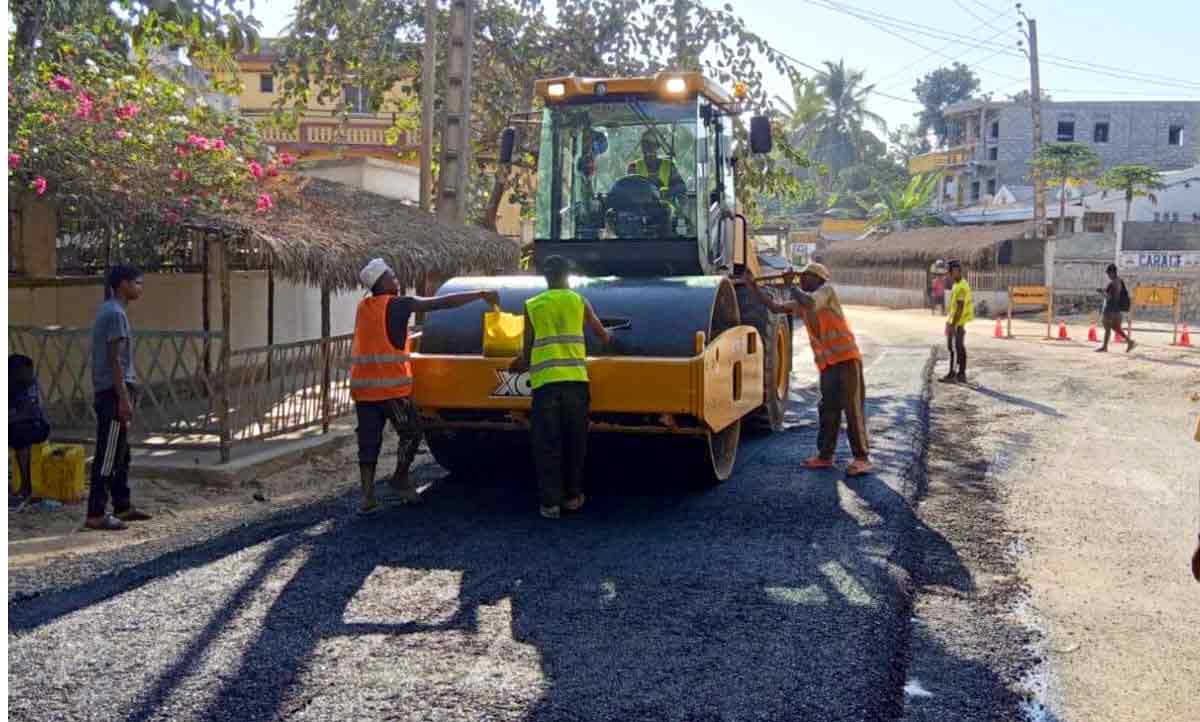
Infrastructure projects are already experiencing acceleration, though the delays accumulated over the years remain significant to overcome. After several years of administrative slowness and execution delays, the State wants to accelerate the implementation of development projects, with a portfolio reaching $1.085 billion at the World Bank. The delays are not new. Over the years, lengthy procedures, successive validations, compensation issues, and land acquisition problems have hindered the start or progress of several projects financed with World Bank support. Result: the portfolio of operations still dependent on various stages before implementation now reaches $1.085 billion. This is not recent financing, but a volume that has accumulated gradually as delays piled up over time. The meeting last Monday, held in Mahazoarivo, between the government and World Bank teams thus brought back to the forefront an old problem: the administration's capacity to quickly transform mobilized financing into concrete achievements. The new watchword is acceleration, with simplified procedures, elimination of redundant steps, and improved compensation processing. For several months, the Minister of Economy and Finance, Dr Herinjatovo Ramiarison, has already drawn attention to the effects of bureaucracy and administrative burdens on public investment execution. He notably ordered the establishment of a task force to reduce unnecessary procedures and accelerate processing, so that available financing could produce faster effects on the economy. Prime Minister Mamitiana Rajaonarison has also raised this issue repeatedly, emphasizing speed, impact, and innovation in public action. In the infrastructure sector, several long-stalled projects have made progress in recent months, thanks to closer monitoring and increased pressure on execution timelines. These initial results show that acceleration is possible when bottlenecks are identified and addressed at the appropriate level. The challenge remains considerable. In energy, transport, water, and social infrastructure, needs remain significant and accumulated delays cannot be resolved in a few months. The challenge is now to make acceleration a permanent method, not a one-off response. For the government, the objective is to move faster from financial commitments to construction sites, then from construction sites to visible results for the population.
Source: Midi Madagasikara