Society
Mobility in Antananarivo: Getting Around is an Uphill Battle
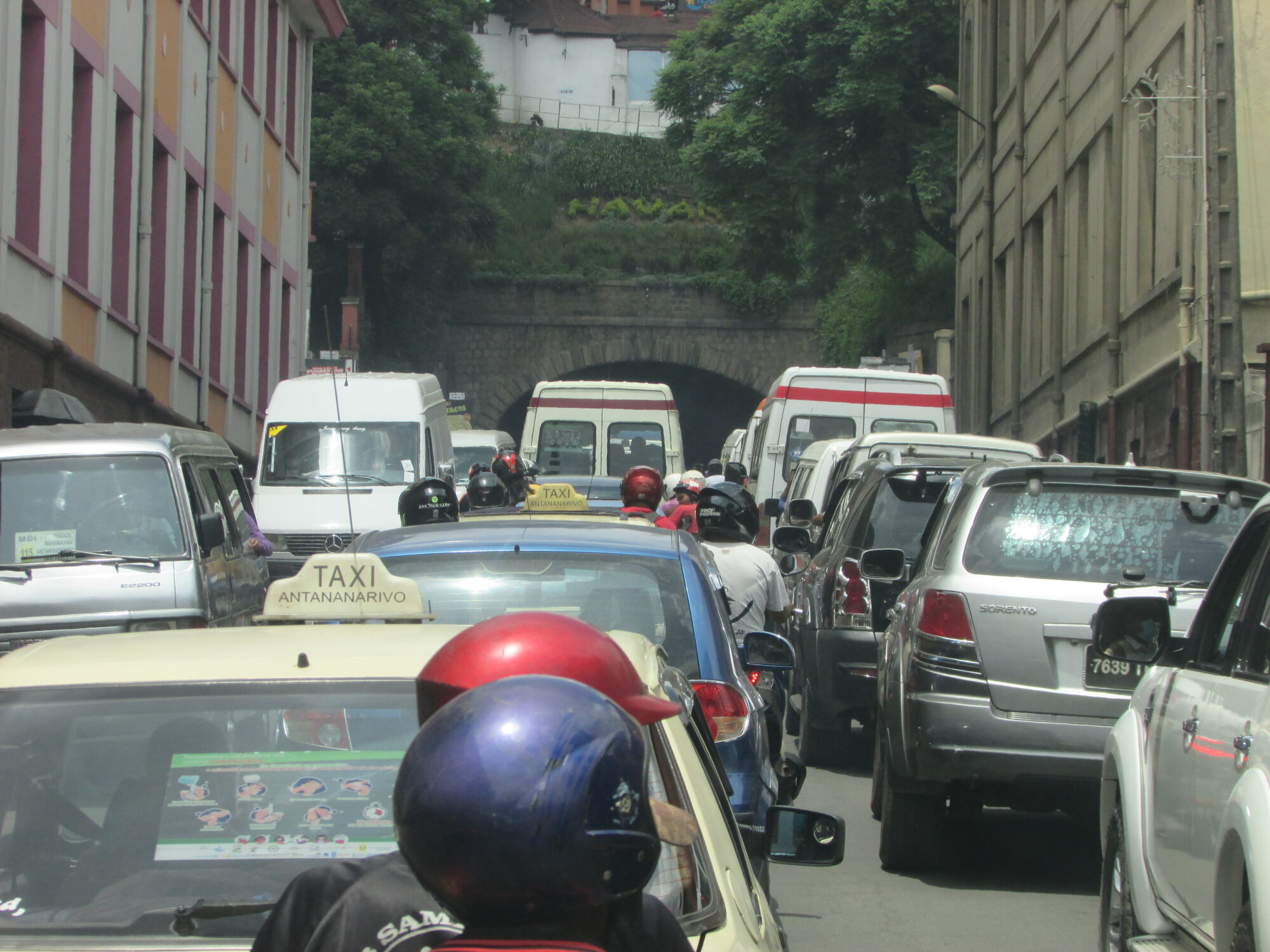
Daily traffic in Madagascar's capital exposes pedestrians, drivers and transport users to risks that far exceed congestion alone. Like in major cities worldwide, walking, crossing a street, taking a taxi-be or reaching one's workplace is a daily challenge in Antananarivo. A recent accident in Ambohijatovo that seriously injured a journalist colleague has brutally highlighted a reality that has become everyday in the capital. Indeed, this incident—far from being a mere news item—signals the conditions of circulation in a capital where public space faces mounting pressure. Occupied sidewalks, chaotic parking, dense traffic, vehicles brushing past each other and difficult crossings reduce safe circulation spaces. For children, elderly people and those with reduced mobility, this vulnerability is even greater. The problem, however, cannot be measured solely by accident numbers. Each journey can mean dozens of minutes, even hours, lost in traffic jams. For workers, these repeated delays reduce time spent with family, resting or on economic activities. Transport costs also weigh on households when trips multiply. Shuttle services planned at Amoronankona bus station to address passenger concerns show that targeted solutions are possible. But Antananarivo needs a more systemic approach, where securing and freeing sidewalks, creating protected pedestrian crossings, identifying accident hotspots, rationalizing taxi-be stops and strengthening public transport form the links in a chain of solutions. Ultimately, the capital must have a genuine mobility policy based on data such as accidents by zone, average travel time, line usage, household costs and traffic flows. For smoothing traffic is no longer enough: the challenge is enabling Tananariviens to go to work, study or simply return home without each journey becoming an ordeal.
Source: Midi Madagasikara