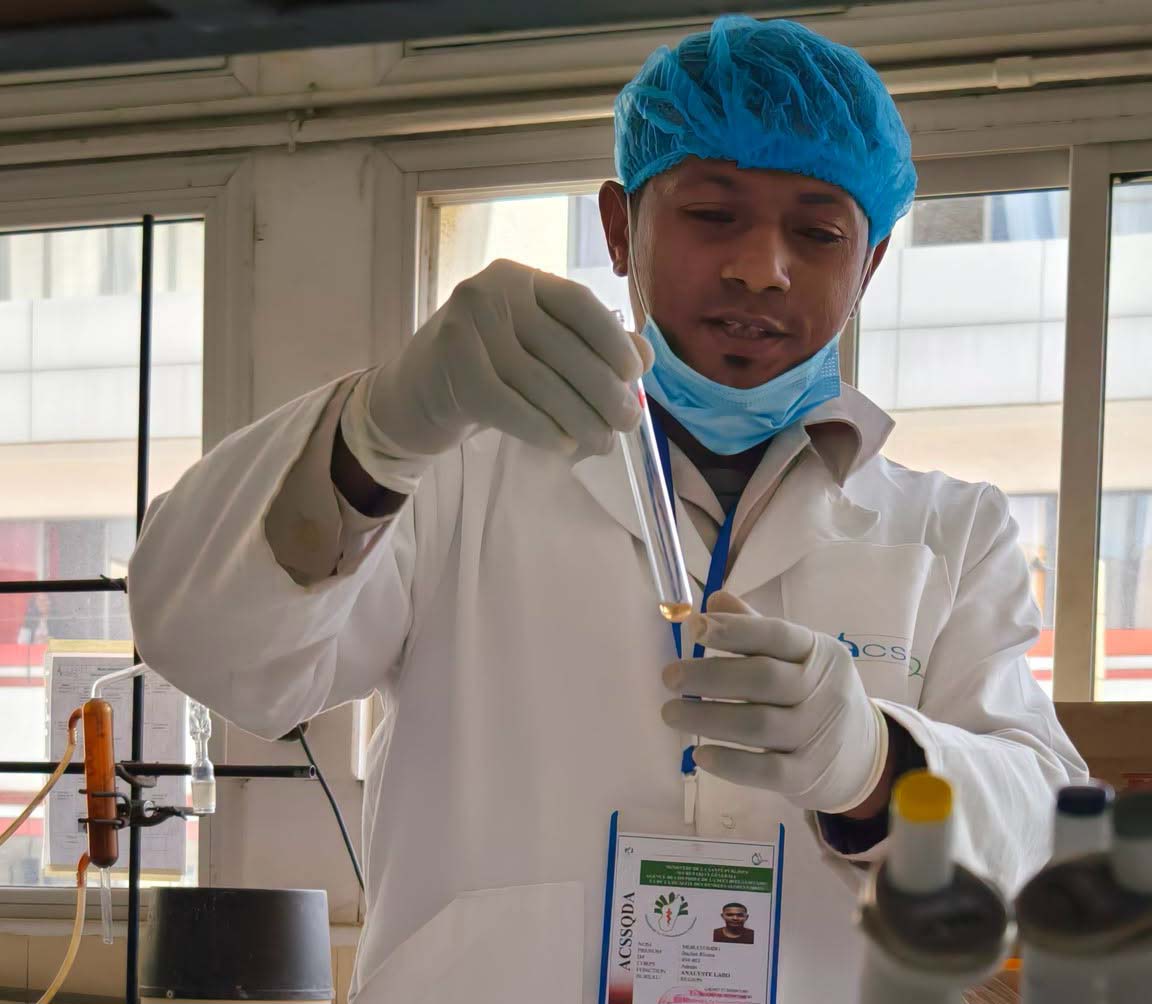
The ACSSQDA now has the capacity to detect the presence of aflatoxin (FAO photo). Peanuts, corn and poorly stored cereals can contain aflatoxin, a toxin extremely dangerous to the liver. To protect consumer health daily, the national ACSQDA laboratory has equipped itself to eliminate this poison from our markets. With support from the FAO and the Ministry of Public Health, the Food Safety Control Agency (ACSSQDA) is acquiring cutting-edge equipment to track aflatoxin in local and imported foodstuffs. This crucial advance will effectively protect the Malagasy population against this formidable toxin, mainly present in peanuts and poorly stored cereals.
Advantages
Since June 2024, the project "technical assistance for quality control and food safety monitoring," implemented by the FAO as part of its Technical Cooperation Programme (TCP), has contributed to strengthening ACSSQDA's capacity. The major innovation of this capacity-building lies in aflatoxin detection, a major breakthrough for the laboratory. Aflatoxin is an extremely dangerous natural toxin produced by certain microscopic fungi that develop on agricultural products, particularly peanuts, corn and cereals, often due to poor storage or moisture. When ingested in high doses or repeatedly, it poses a serious public health risk, potentially causing severe liver damage and promoting liver cancer.
Normally, ACSSQDA plays a crucial health shield role. This state agency ensures microbiological and physicochemical quality control of foodstuffs distributed on the national market or imported. Its usual analyses aim to detect the presence of pathogenic bacteria such as salmonella or coliforms, heavy metals, and pesticide residues, to protect consumers against food poisoning.