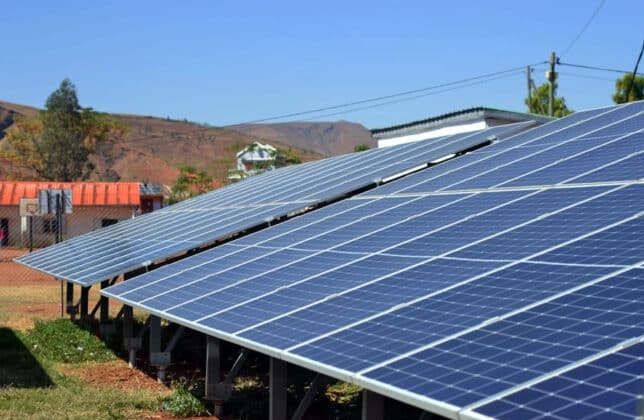
Investments in renewable energy are among the activities that could benefit from Madagascar's new green finance classification framework. Madagascar is moving toward establishing a national framework to clearly distinguish genuinely "green" investments. A first version of Madagascar's Green Taxonomy is currently undergoing public consultation. The project is led by a technical committee bringing together Banky Foiben'i Madagasikara (BFM), the Ministry of Economy and Finance (MEF), and the Ministry of Environment and Sustainable Development. The objective is both financial and environmental. According to its promoters, the taxonomy should constitute a common language enabling banks, investors, businesses, and public authorities to determine which economic activities can truly be qualified as green. The framework aims to develop Madagascar's sustainable finance market, facilitate financing mobilization, and direct more capital toward climate resilience, natural capital preservation, and sustainable development. It should also help reduce the risk of greenwashing.
Six major objectives serve as reference points: climate change mitigation and adaptation, sustainable use and protection of water and marine resources, circular economy, pollution prevention and control, and biodiversity and ecosystem protection and restoration. In practice, an activity cannot be considered green based solely on its name. It must make a substantial contribution to at least one environmental objective, respect the "Do No Significant Harm" principle—meaning it must not cause significant harm to other objectives—and meet minimum social safeguards. The project covers a wide range of activities, listing 108 in total, including agriculture, energy, manufacturing, transport, construction, water and sanitation, tourism, disaster risk management, and certain green and blue finance mechanisms. In the energy sector, for example, photovoltaic solar, wind, hydroelectricity, electrical storage, and clean cooking solutions are included. The taxonomy will primarily address banks, microfinance institutions, investors, insurers, businesses, and public authorities. It can be used to structure green loans, label sustainable financial instruments, analyze portfolios, or monitor green financing. Its use will remain voluntary in this first phase. The approach is also intended to be progressive. Activities not yet perfectly aligned could be recognized as transition activities if they demonstrate a credible, measurable, and verifiable trajectory of environmental improvement. For Madagascar, heavily exposed to cyclones, droughts, floods, and other effects of climate change, the challenge is now to make this classification a tool capable of reassuring investors and attracting more capital toward genuinely sustainable projects.