Domestic
National Assembly: Only two of seven bills adopted
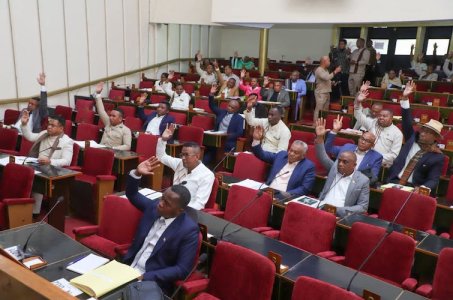
The results are disappointing for the second extraordinary session of the National Assembly in 2026. Of the seven bills on the agenda, only two were adopted. The five others have been postponed to a future session. Clearly, this outcome raises questions about the effectiveness of an extraordinary session and the public spending involved in reconvening deputies. The seven bills before them concern bill no. 016/2026 relating to a supplementary agreement on finance and productive investments within SADC; no. 019/2026 concerning gambling, gaming establishments and operators; no. 038/2026 amending certain provisions of the general statute of the military; no. 039/2026 on the safe, secure and peaceful use of nuclear technology; no. 040/2026 concerning electronic communications and digital infrastructure; no. 042/2026 on combating cybercrime; and no. 043/2026 authorizing ratification of the United Nations Convention against Cybercrime, known as the Hanoi Convention. At the end of the session, only texts concerning the general statute of the military and the agreement on finance and investment within SADC were adopted. The five others must wait. The National Assembly explains this postponement by the importance and sensitivity of the texts. Bill no. 042/2026 on cybercrime, for example, has already been debated in committee, but several of its provisions would require more time. The stated objective is to avoid rushing the adoption of texts that could have significant consequences for the population. This caution is certainly necessary, but it raises another question: what is the point of convening an extraordinary session if five of the seven scheduled texts cannot ultimately be fully examined? A parliamentary session is hardly a cost-free event. It mobilizes public resources and can entail specific expenditures. The question concerns mainly the allowances possibly linked to these convocations, which must cost the state dearly and therefore taxpayers. Unfortunately, transparency remains sorely lacking in the administration and even less so in the financial matters of the Malagasy state, worse still at the level of the palace of democracy. This is obviously not a call for hastily voted laws to improve a statistical record. Texts that engage the country's future must be studied with all necessary rigor. But precisely, when an extraordinary session is convened, the conditions allowing deputies to seriously examine the files should be established beforehand. The president of the National Assembly has already asked the government to hold another extraordinary session to continue examining the postponed texts. After two bills adopted out of seven, deputies could therefore be convened again to complete work that remains largely unfinished. A situation that raises questions both about the organization of parliamentary work and the optimal use of public funds.
Source: Madagascar Tribune