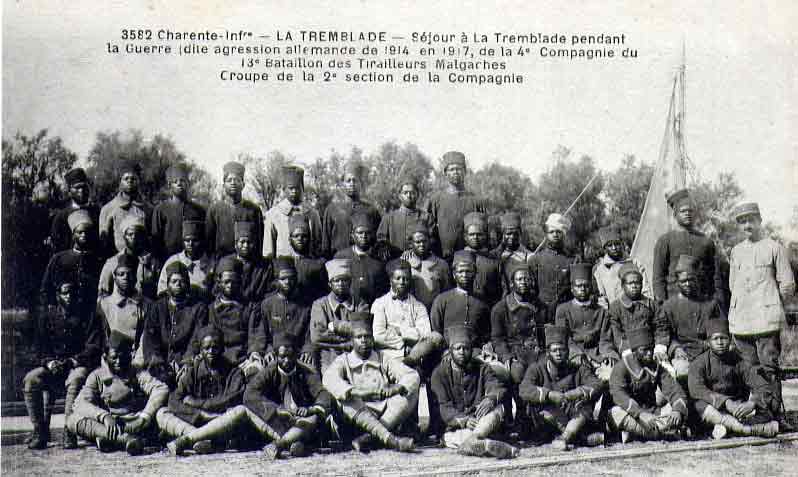
No one has ever questioned whether the Malagasy economy experienced growth during the First World War. According to the book "Madagascar's Effort During the War from Financial, Economic and Military Perspectives (Europeans and Indigenous)" (1919) by Hubert-Auguste Garbit, the governor-general of Madagascar from 1914 to 1917 arrested no fewer than 300 Malagasy patriots, with a particular focus on intellectuals. Eight of them were sentenced to life imprisonment with hard labor. A man truly worthy of French Enlightenment ideals, one might say.
During World War I, poor Malgaches were forced to produce for France 20,000 tonnes of leather between 1914 and 1916. More than 18,000 tonnes of tannin bark for shoe manufacturing, among other things. 46,000 tonnes of graphite; for cassava, 21,000 tonnes in 1917 alone. A minimum of 12,500 tonnes of raffia for camouflage. This demonstrates the civilizational vampirism of France toward a country it now considers to have a historical relationship with. The term "vampirism" is apt, as colonial administration showed Hitlerian severity toward reluctant peasants. Soldiers were sent to search granaries, accompanied by torture and arrests. This period also saw severe inflation: the population suffered deprivation while foreign speculators thrived. Requisitions, forced labor, forced enlistment—these mechanisms brought an entire population to its knees. With the economy's foundation completely restructured, Madagascar struggled to break its vulnerability cycle even after independence in 1960. All for French colonizers. Most Malagasy families, with their lands "seized," would never recover their property.