Economy
Gregory Clerc: CASTEL Group to Strengthen Investments in Madagascar
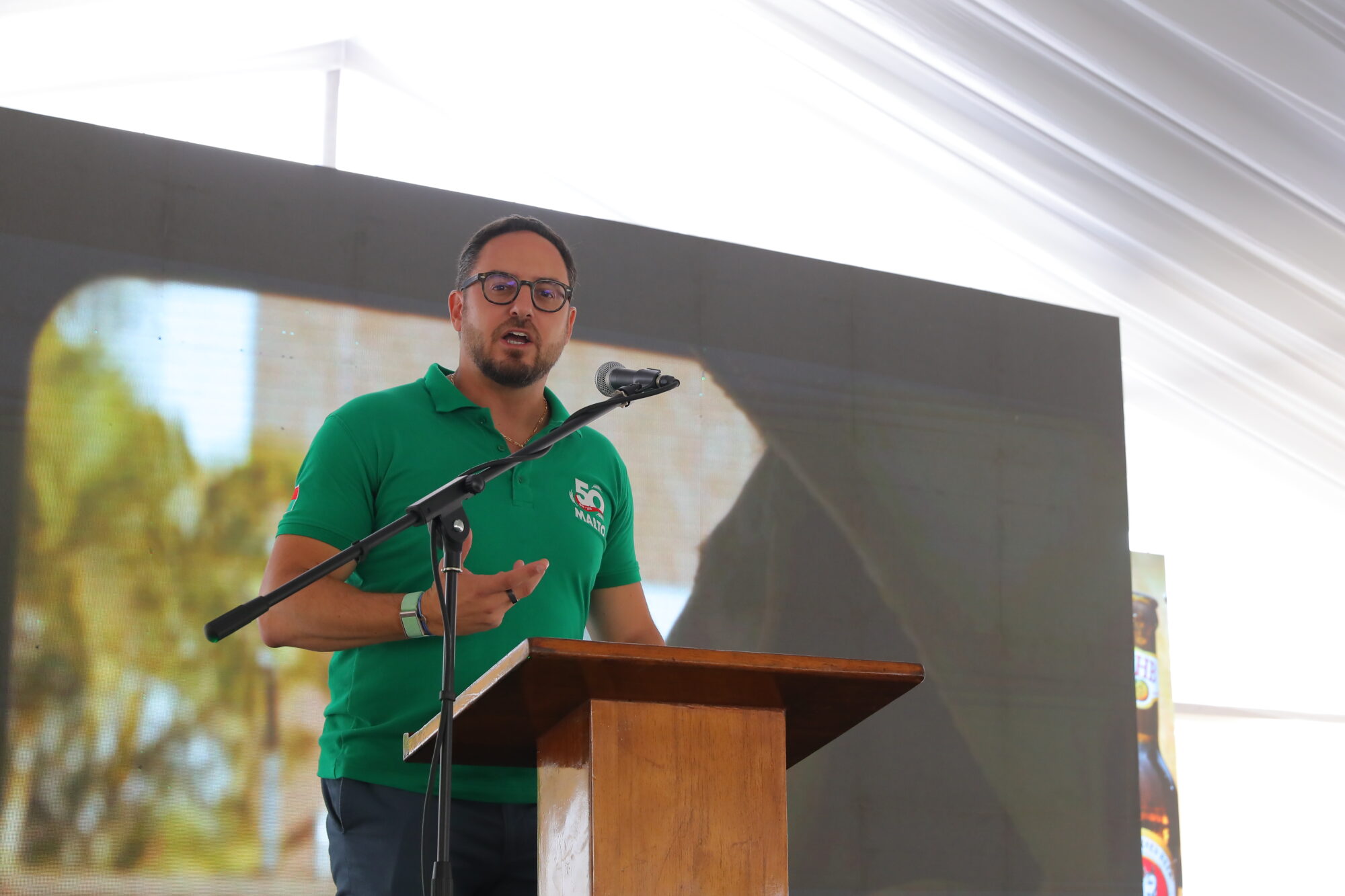
Gregory Clerc, chief executive officer of the CASTEL group, parent company of STAR, discusses the company's promising prospects and plans to strengthen its investments in Madagascar. Interview. Midi Madagasikara: It is well known that for over 70 years of presence in Madagascar through STAR, the CASTEL Group has built solid industrial and economic foundations. What are your investment priorities and ambitions for the subsidiary today? Gregory Clerc: Our ambition is clear: to continue investing in Madagascar and ensure STAR's development over time. For more than 70 years, we have been present in the country, and this history gives us a particular responsibility to continue growing our industrial capacity and the ecosystem around it. Our investments aim primarily to modernize our production capacity, strengthen the quality and performance of our sites, and support their environmental transition. But our commitment goes far beyond the industrial tool. With MALTO and over 20,000 farmers involved in the barley sector, we also contribute to developing a value chain deeply rooted in the Malagasy economy. We believe STAR's growth must largely benefit its environment: employees, farmers, suppliers, distributors, and partners. This is the dynamic we want to strengthen in the coming years. M.M: Product quality, brand strength, innovation: what assets does STAR rely on today to meet the expectations of Malagasy consumers and evolve its offerings? G.C: Quality is our first commitment to consumers. STAR has historical industrial expertise, experienced teams, and brands deeply embedded in the daily lives of Malagasy people. This is an extremely solid foundation. But a strong brand must also know how to evolve. Expectations change, consumption patterns change too; it is our responsibility to anticipate them. This involves innovation—new products, new formats—and an offer segmentation that allows us to respond to the diversity of expectations and consumption occasions. Combining the power of emblematic brands, deep knowledge of the Malagasy market, and genuine innovation capacity, without ever compromising on quality: this is precisely where our strength lies. M.M: Environmental performance is fully part of STAR's industrial strategy. What concrete actions have you undertaken in Madagascar, particularly to better manage water resources and enhance waste management? G.C: For an industrial group like ours, every new investment must be designed to simultaneously improve our operational and environmental performance. The two can no longer be conceived separately. Our objective is to produce better while controlling our resource consumption and environmental footprint. In Madagascar, water is an absolute priority. We work continuously to improve its use in our industrial processes and to protect it sustainably. Managing and enhancing waste are also essential. The KOPAKELATRA program, dedicated to collecting and recovering plastic waste, illustrates this concretely. It progressively mobilizes different stakeholders around this responsible dynamic. M.M: Attracting young talent, training them, and enabling them to grow throughout their careers is a key challenge for STAR. How is this commitment translated concretely in Madagascar? G.C: Our priority is that Malagasy skills grow and support the company's expansion. We want to offer young people the opportunity to learn our trades and enable everyone to benefit from continuous training to evolve throughout their careers. This naturally translates into training, knowledge transfer between generations, manager support, and professional mobility. STAR has strong industrial, commercial, and technical expertise. Our responsibility today is to develop new skills. This is a strong conviction across the Group: our development in Africa must primarily rely on the continent's talent. Investing in the men and women who make STAR is investing in the company's performance and future in Madagascar. Interview conducted by R.Edmond
Source: Midi Madagasikara