Domestic
Election Preparations: Political Consultations Continue at Iavoloha
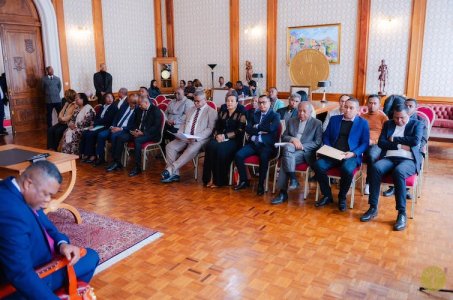
Consultations on preparations for the upcoming elections are continuing at the Iavoloha State Palace. Several political formations and associations have already been received by Colonel Michaël Randrianirina, president of the Refoundation of the Republic, as part of this process which is set to extend over several days. The first meetings began on Tuesday, September 1st. For this initial phase, the head of state successively received the Firaisankina political group, a women's association, and the KFIM. The exchanges were mainly focused on listening to participants. Each delegation was able to present its analysis of Madagascar's electoral situation and share its proposals concerning the upcoming elections. Discussions also covered avenues for improving the electoral process and its environment. The consultations continued on Wednesday with three other entities: IRMAR, the Gasikara movement, and SIAP. Their representatives in turn exchanged with Colonel Michaël Randrianirina and presented their proposals on the conditions for organizing future elections. Through this series of meetings, the presidency is demonstrating its willingness to involve different political perspectives and components of society in the discussions. The participation of formations with different political positions is part of this search for inclusivity. The stated objective is to gather as broad a range of proposals as possible in order to identify improvements to be made to the electoral process. Ultimately, this approach should help create conditions for transparent elections whose results can be accepted by all stakeholders involved. The international community is also following these consultations. Representatives from the United Nations system, the African Union, and the Southern African Development Community (SADC) have been invited to attend the exchanges as observers. Other political formations, associations, and representatives of civil society are still to be received at Iavoloha in the coming days. These various contributions should make it possible to identify the main points of convergence, as well as divergences, regarding preparations for the upcoming elections in Madagascar.
Source: Madagascar Tribune