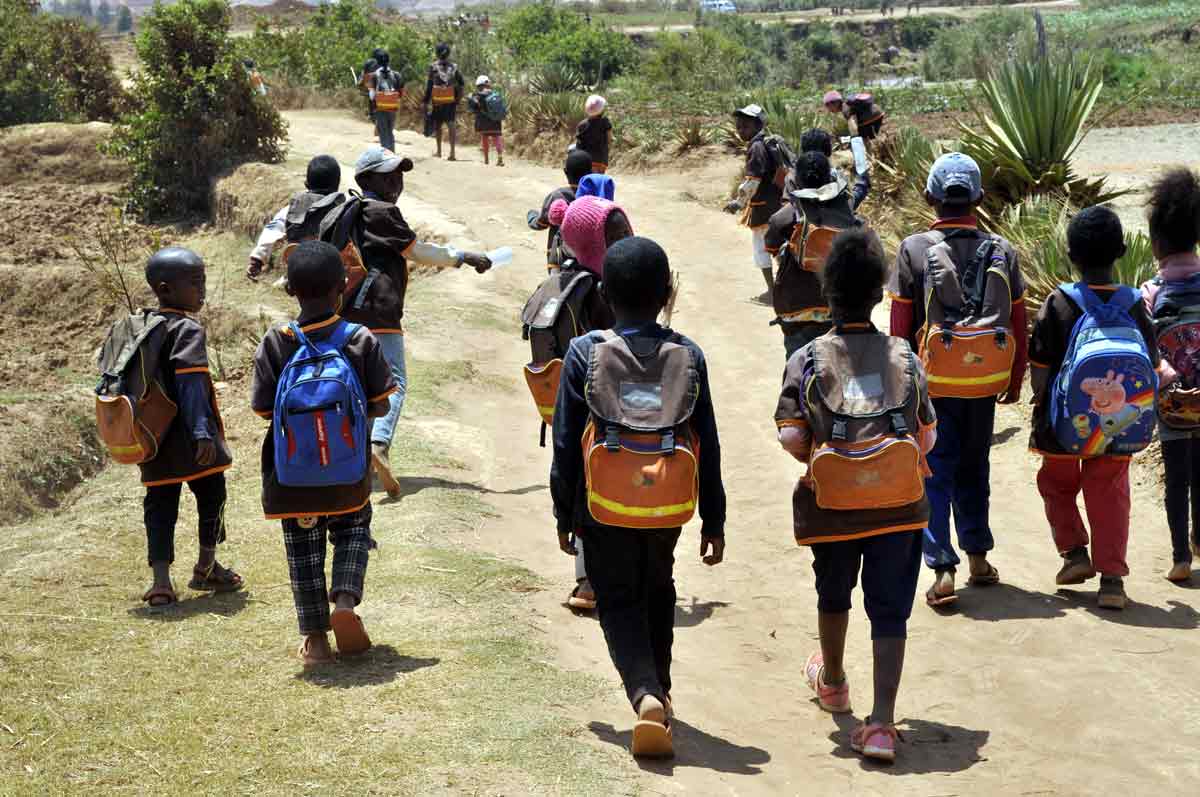
Only 47% of children complete primary school and 37% of children under five still show stunted growth. These figures from the MICS 2025 survey reveal the full scope of Madagascar's social situation. Eight years after the previous Multiple Indicator Cluster Survey conducted by the National Institute of Statistics (INSTAT), with technical and financial support from UNICEF and several partners, new indicators allow measurement of progress achieved, but also the scale of persistent challenges.
Education
In 2018, MICS already showed significant school dropout rates. Indeed, fewer than three children out of five completed primary school, while the adjusted net primary attendance rate was 76%. In its 2025 version, the survey shows attendance remains at nearly the same level, at 75%. But only 47% of children now complete the primary cycle. These figures call for "moving beyond the sole question of school access." The real challenge is also maintaining students in the school system and their ability to complete the cycle.
Improvement
Nutrition offers another particularly telling indicator. In 2018, stunted growth affected 42% of children under five. MICS 2025 places it at 37%. This change suggests improvement, but the level remains concerning, as more than one child in three is still affected by chronic malnutrition. It should be noted, however, that the consequences of this malnutrition go beyond immediate health, as it can affect development, learning, and ultimately economic potential.
Vision
Conducted among 19,785 households, the MICS 2025 survey thus provides a new national snapshot after 2018. It informs approximately 43% of Sustainable Development Goals indicators. The challenge now is to make these data more than just a status report. As decision-making tools, they should allow measurement of trajectories and better guide public policies.