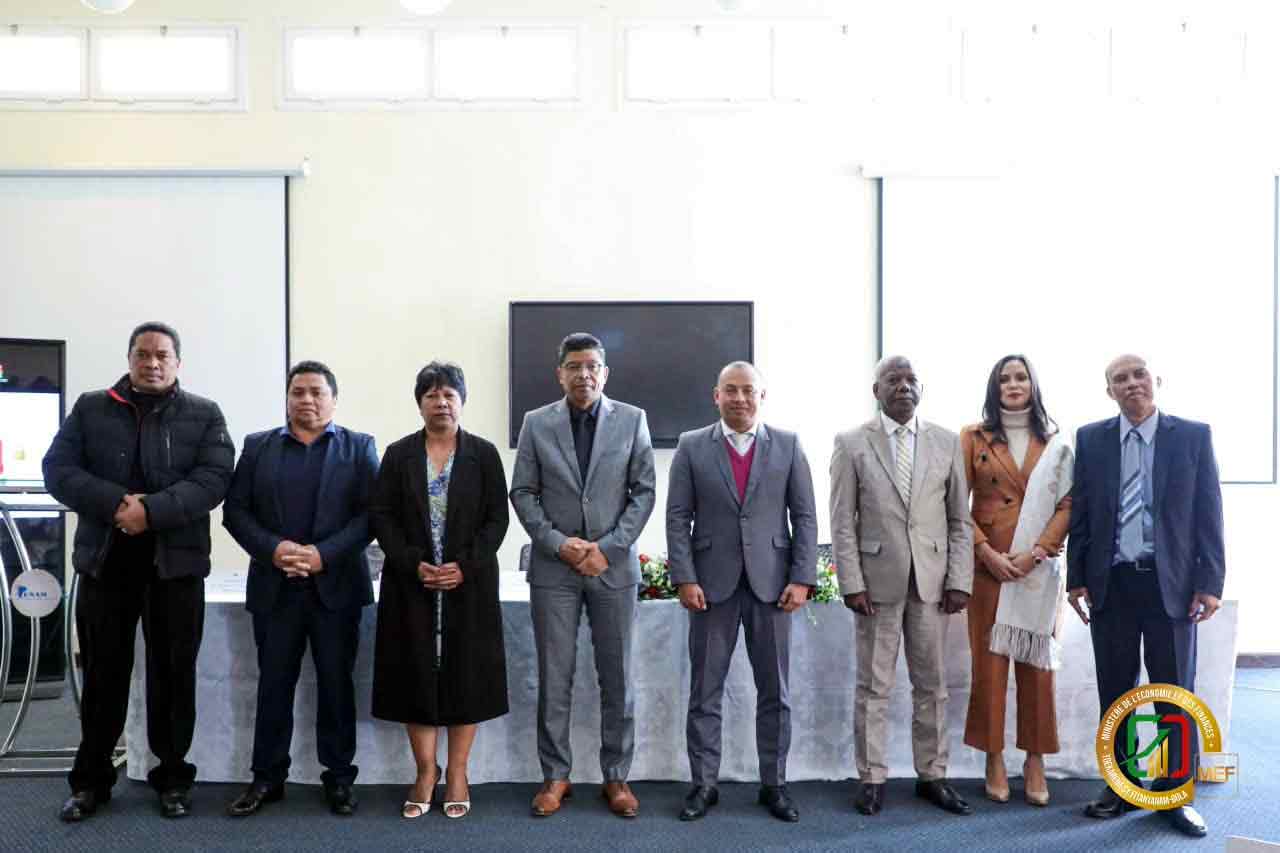
Regional budget conference for Analamanga held yesterday at ENAM Androhibe. The preparation of the 2027 Initial Finance Law (LFI) aims to be more grounded in field realities. This is the key objective of Regional Budget Conferences (CBR), relaunched this year after several years of interruption. Following Itasy on August 21, Analamanga hosted, on Monday August 31, at Madagascar's National School of Administration (ENAM), regional stakeholders called to raise their needs and priorities in building the next state budget. For the Minister of Economy and Finance, Dr Ramiarison Herinjatovo Aimé, this approach first represents a return to normal in the budget preparation process. The CBR meetings are provided for by legislation and allow the LFI preparation to be brought closer to regional and municipal realities. The minister also emphasized the necessary coherence between the LFI, the PGE-R and its implementation plan to ensure alignment between state orientations, retained priorities and mobilized budgetary resources.
Giving substance to decentralization
The relaunching of CBRs primarily reflects the desire to give more concrete substance to decentralization. Regions and local authorities must be able to directly express needs observed on the ground, rather than having all budget arbitrations defined solely from the central level. This orientation has already resulted in increased resources for decentralized territorial authorities and deconcentrated territorial services in the latest Supplementary Finance Law. However, choices must be made. "In a context of limited resources, it is not about responding to all demands simultaneously, but about defining priorities and better directing resources toward actions capable of producing concrete results," the minister stated at the opening of proceedings. Infrastructure, public services, equipment or support for economic activity: needs are numerous, but not everything can be financed at once. The task is therefore to identify what is truly priority and interventions capable of producing the greatest impacts. Priorities defined by each region will be integrated into the CBR platform. Following these territorial consultations, a Central Budget Conference must consolidate and coordinate the various proposals to integrate them into the national budget preparation process.
Results-oriented
The desired change, however, does not concern only the geographic distribution of credits. It also concerns how public resources are used. The watchword advanced by the MEF is "results-oriented spending." In other words, budget efficiency should no longer be assessed solely through the amount actually spent, but especially through the results and economic and social impacts achieved. Budget execution evaluation notably highlighted a still-low execution level, with identified difficulties including procedure complexity and administrative delays. "The most important thing is not just the volume of money, but how it is used," the minister also explained in his interview. Even with limited resources, the objective must be to prioritize spending producing tangible results for the population. This approach is particularly relevant at the regional level. Infrastructure built in the right place, improved energy supply or better-equipped public services can directly support the economy and improve living conditions. For Analamanga, the minister notably highlighted the degradation of economic infrastructure. Agribusiness and tourism also figure among sectors deserving particular attention given their potential to stimulate economic activity and create jobs.
Greater autonomy
Decentralization cannot, however, rely exclusively on transfers from the central budget. The MEF is also encouraging municipalities and local authorities to better mobilize their own resources and progress toward greater financial autonomy. The minister notably mentioned mining royalties, whose distribution among regions and municipalities is already provided for by law. Some revenues due to local authorities have not yet been effectively transferred. The objective is therefore to direct these resources to the concerned beneficiaries so they can finance local development projects. Through the CBRs, the preparation of the 2027 LFI goes beyond