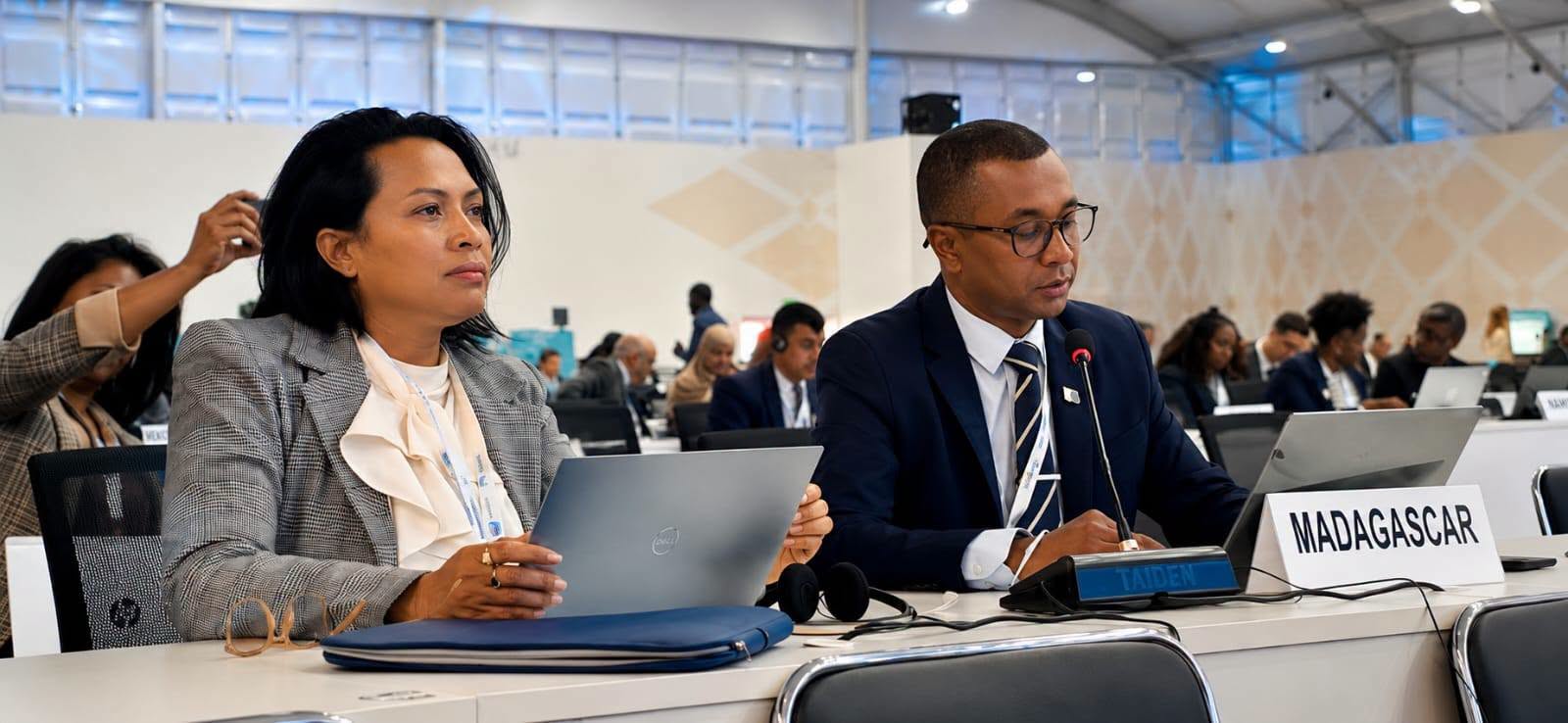
Madagascar's participation in the 17th session of the UN Convention to Combat Desertification (COP17) is yielding results. The country will receive an allocation of $27.17 million under the ninth funding cycle of the Global Environment Facility (GEF9). This funding is expected to accelerate investments in combating desertification, restoring ecosystems, and strengthening community resilience against drought.
The stakes are particularly high for Madagascar, where 18.74 million hectares of land were considered degraded in 2019, representing nearly 32% of the territory. That same year, more than 15.8 million people were exposed to drought, according to UN Convention data.
During the conference, Madagascar reaffirmed its priorities around sustainable land management, climate resilience, and food security. The Malagasy delegation also advocated for innovative financing mechanisms and more transparent, accessible, and predictable international funding.
These demands gained particular importance as COP17, held August 17-28 in Ulaanbaatar, focused on "Restore Land. Restore Hope" and aimed to strengthen investments in land restoration and drought resilience. For Madagascar, discussions directly concern agriculture, water resources, rural livelihoods, and ecosystem preservation.
Soil degradation can reduce agricultural productivity and increase population vulnerability to drought and climate disruptions. The country seeks to strengthen private sector mobilization, technology transfer, and national capacities to better address land degradation and drought impacts.
COP17 represents an opportunity to better align desertification efforts, food security, climate adaptation, and rural development. For Madagascar, the challenge will now be translating these commitments and funding into concrete on-the-ground actions, particularly through soil restoration projects, sustainable water management, and support for vulnerable communities.