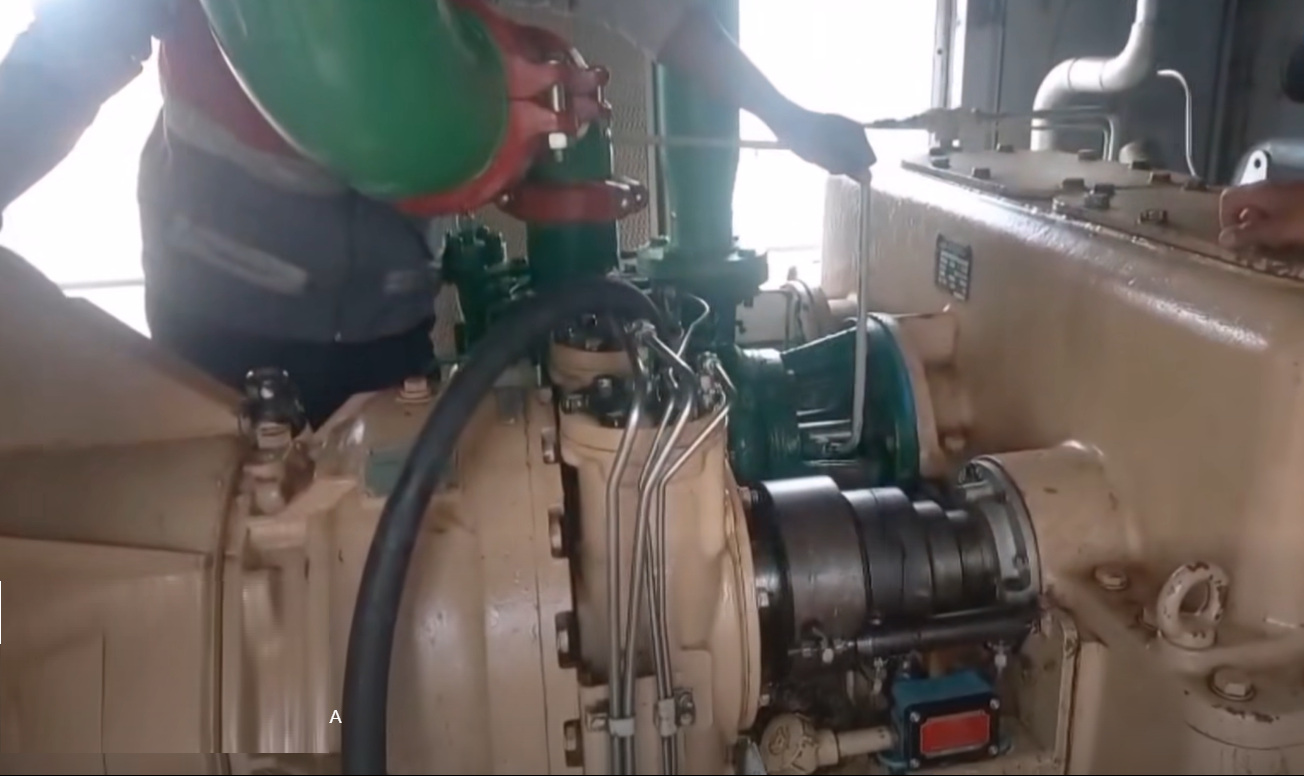
Combustion turbine No. 1 at Ambohimanambola power plant has finally been repaired, despite complications mentioned by Jirama technicians. After several difficult days, balance has returned to the Antananarivo Interconnected Network (RIA). TAC 1 at Ambohimanambola, whose failure had caused power cuts last week, has been repaired and returned to service. Available production capacity now allows the network's needs to be met. However, users are not entirely protected from outages. The vulnerability of Jirama's distribution infrastructure remains a major challenge. Power has returned, but vigilance is essential. After a week marked by rolling blackouts in several districts of Antananarivo and surrounding areas, the situation has significantly improved on the RIA. The repair of TAC 1 (combustion turbine No. 1) at Ambohimanambola has restored sufficient production capacity to meet current RIA needs. Last week, this combustion turbine's failure had seriously disrupted the balance between electricity supply and demand. The technical problem, reported early in the week, forced Jirama to shut down TAC 1. The situation was particularly delicate as the dry season simultaneously reduced hydroelectric plant production capacity. To maintain network balance during peak hours, rolling blackouts became necessary in several zones of the capital and surrounding municipalities.
Delicate Repair. TAC 1's restoration was not immediate. After several interventions by technical teams and a failed test, the combustion turbine had to be dismantled again last Friday to allow for more thorough inspections and work. The operation ultimately allowed the equipment to be repaired and returned to operation over the weekend. This repair brings significant relief during the dry season. Ambohimanambola's combustion turbines play a strategic role in securing the RIA when hydroelectric production decreases. They allow rapid mobilization of additional thermal capacity to compensate for production losses linked to water level drops. TAC 1 had already experienced several technical difficulties in recent weeks, regularly putting network balance under strain. Its availability is thus a determining element of the system put in place to get through the dry season.
Blackouts Resolved. With its return to service and mobilization of other available units, production capacity is now sufficient to meet current RIA demand. This means that under normal circumstances, it should no longer be necessary to schedule blackouts to cover a megawatt deficit. This improvement does not, however, mean that all electricity cuts will immediately disappear in Antananarivo. Another, more structural problem remains: the reliability of the network responsible for delivering electricity to consumers. This is essential because a power cut is not systematically synonymous with lack of production. Even when sufficient electricity is available at power plant outlets, incidents can occur on lines, distribution substations, transformers, or cables. Jirama has faced aging infrastructure for several years and, in certain areas, saturation of its facilities. The constant increase in electricity needs in the Antananarivo agglomeration also increases stress on existing equipment. Heavily stressed transformers, damaged cables, line anomalies, or incidents at substations can thus cause localized interruptions, regardless of the amount of energy produced. This is now where much of the challenge lies.
Distribution. Lasting improvement in electricity supply therefore does not rest solely on installing new production capacity. It also requires the ability to properly transport and distribute each available megawatt. Investments in new thermal, solar, or hydroelectric plants risk not producing their full effects for consumers unless, in parallel, the electrical network is strengthened. Modernizing substations, replacing obsolete equipment, increasing transformer capacity, and securing lines thus become essential.
Economy
RIA: Production Now Sufficient, Distribution Network Remains Weak Link
Source: Midi Madagasikara