Domestic
Organic Agriculture: Producer-Operator Cooperation for Sustainable Supply Chain
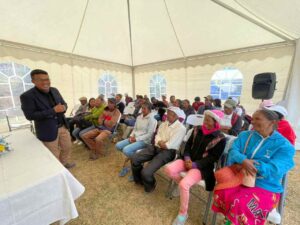
A conference was organized with producers in Anjeva to launch this unprecedented model. The rural municipality of Anjeva is becoming a pilot commune for promoting organic agriculture, aiming to safeguard public health while strengthening community development. In Madagascar, the land is fertile and food demand continues to grow. Yet many agricultural operations still struggle to develop sustainably due to lack of resources to purchase inputs, low yields, limited market access, and prices imposed on producers. Facing this reality, Faly Export group chose to build a model that addresses all obstacles encountered by producers. The objective is to create a sustainable organic supply chain where each link in the chain contributes to collective success through cooperation between producers and operators. Anjeva commune, already recognized as one of the main vegetable production zones supplying the Toamasina region, was chosen as the pilot. The group is progressively implementing a new organization that places producers at the heart of economic decisions. Beyond agricultural performance, this initiative also addresses a major public health issue. By encouraging the use of biological fertilizers and environmentally-friendly agricultural practices, the project aims to produce healthier food for Malagasy consumers, helping prevent cancers, among other benefits. By mutual agreement, the lack of financial resources constitutes the first obstacle to productive agriculture, according to producers. Many forgo investing in quality inputs due to cash flow constraints, limiting their production and income. Faly Export thus provides a concrete solution by providing selected biological fertilizers with a facilitated payment mechanism. This system allows them to launch agricultural campaigns under better conditions. This solution promotes a gradual transition to organic agriculture while securing production capacity of family farms. For years, producers sold their harvests without negotiating prices, often imposed by the market or intermediaries. The model developed in Anjeva commune operates on a completely different logic. Producers and economic operators are no longer simple sellers and buyers. They become partners in the same economic enterprise. Decisions concerning markets to develop, commercial strategies, and selling prices are made by mutual agreement between both parties. Producers directly participate in choices determining their product value, while operators provide their expertise in commercial organization, logistics, and distribution. This shared governance allows facing market realities together, better responding to consumer expectations, and building a more solid and competitive supply chain. Sustainable outlet, the value sharing follows the same logic. Benefits generated by commercialization are distributed among partners according to collectively-defined rules. Wealth created by the supply chain benefits all those contributing to its success. Commercial strategy extends beyond production. To guarantee sustainable outlets, several mechanisms are already being deployed in the Toamasina region. Specialized sales points have been identified to exclusively market products from this organic supply chain. A virtual shop will allow consumers to easily order their products, while a network of partner relay points will bring organic vegetables closer to different city neighborhoods. The objective is to make local, organic, quality products accessible to the greatest number while ensuring a stable market for producers. Furthermore, the project extends beyond profit-sharing between producers and operators. Part of commercial revenues will feed a common community fund, intended to finance social priorities defined by producers themselves while contributing to social development. This fund will be administered according to community decisions. Producers will collectively choose.
Source: Midi Madagasikara