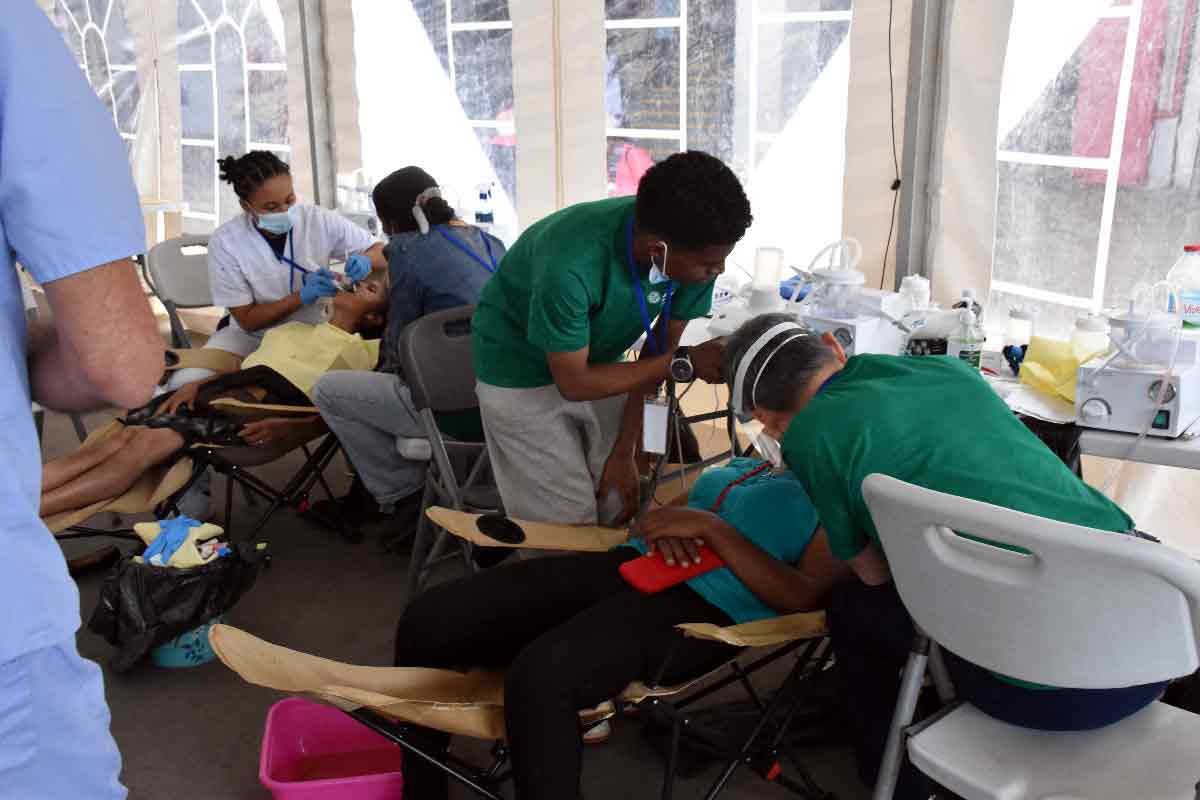
Dental consultations drew the largest crowds at this event. The "Foaraben'ny fahasalamana," organized by Adventist World Radio (AWR), closes today at Kianja Barea Mahamasina. Victim of its own success, this free medical fair far exceeded all attendance predictions, forcing organizers to turn away people due to massive demand for care. Many Malagasy still wish to benefit from free treatment without being able to access it. This is the observation made since Tuesday at Kianja Barea Mahamasina during the "Foaraben'ny fahasalamana," or international health fair. Launched last Tuesday under the initiative of Adventist World Radio (AWR), led by its president Jim Howard, the Foaraben'ny Fahasalamana (International Health Fair) will close today. Over four days, this event experienced record attendance, far exceeding initial organizational committee predictions. Endless queues surrounding the Mahamasina stadium forecourt from 1 a.m. onwards: the picture is clear—Tananarivo residents stormed this medical fair. Facing precarity and high costs of care in private clinics, the free services offered sparked exceptional enthusiasm.
Attendance
According to Prof. Hanitrala Jean Louis Rakotovao, general coordinator of the event, public participation exceeded all expectations. "Our predictions were based on treating 2,500 patients per day, approximately 8,500 people total over four days of action. However, ground reality surpassed our hopes, with massive crowds each morning," he explained. This massive attendance imposed strict logistical limits. "We sincerely apologize to the many people we had to turn away. With medication volumes and operational capacity of our equipment fixed daily, we could not satisfy everyone despite our teams being present at dawn," the general coordinator regretted.
Services
Among the range of services offered within 80 fair stands, ranging from pediatrics to prenatal care, ultrasound, diabetes screening, cervical cancer and HIV testing, dental and ophthalmological consultations most mobilized visitors. Each person seeking dental care received a complete hygiene kit (toothbrush and toothpaste), plus treatment. "It was not merely about extracting teeth. Our practitioners performed cleanings, conservative treatments and provided prevention advice," Prof. Hanitrala Jean Louis Rakotovao clarifies. Similarly, corrective glasses were distributed free to people suffering from visual disorders. Immense relief for household budgets, as testified by this mother encountered in the queue. "A dental extraction costs about 20,000 ariary at a private dentist. Here, not only is treatment free, but we also receive necessary medications. It's a great relief, as the money saved will buy food for the whole family." Narindra Rakotobe