Economy
Economic Recovery: End to Wasteful Spending and Red Tape, Ordered by Dr Ramiarison
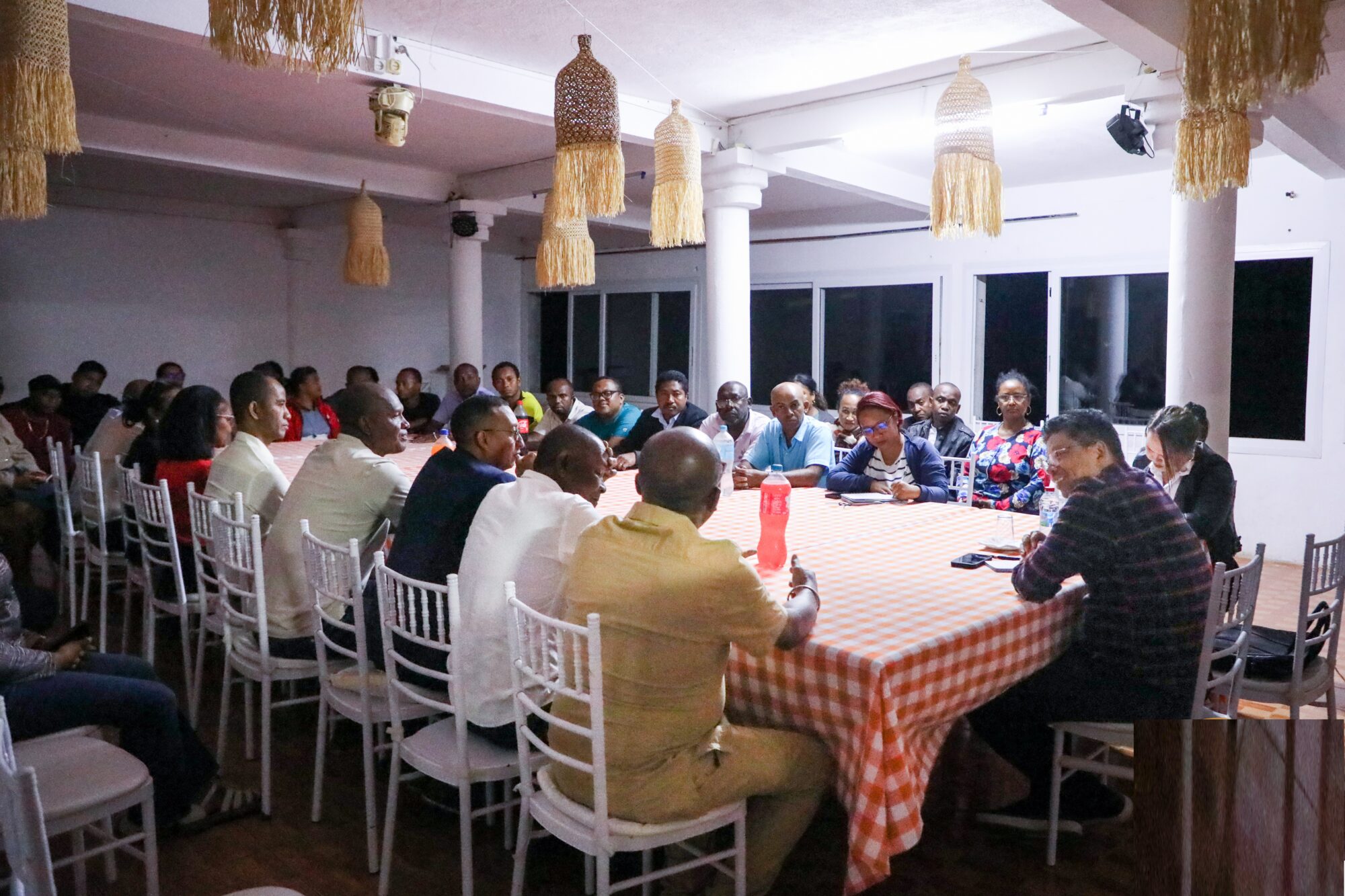
Meeting between Finance Minister Dr Herinjatovo Aimé Ramiarison and Ministry of Economy and Finance agents based in the Fitovinany, Vatovavy and Atsimo-Atsinanana regions. Facing agents from the Ministry of Economy and Finance in the South-East, Minister Dr Herinjatovo Aimé Ramiarison set priorities: financial administration must become a genuine lever for economic recovery and concretely improve services to users. A ministry at the heart of recovery. On the sidelines of his participation in ASIEF in Manakara, the Minister of Economy and Finance, Dr Herinjatovo Aimé Ramiarison, met with MEF agents from the Fitovinany, Vatovavy and Atsimo-Atsinanana regions. A straightforward meeting, during which difficulties of decentralized services were exposed, but which above all allowed the minister to recall the department's responsibility in the current economic situation. High-impact public spending, strengthened fight against fraud and corruption, administrative simplification, local taxation and private sector support were extensively discussed during this meeting. "We must see the priorities," the minister insisted. In public finance matters, every ariary spent must produce concrete impact on economic and social development. He thus calls for an end to wasteful and extravagant spending, in a context where resources remain limited and needs are numerous. Issues to resolve On the ground, agents drew up a long list of constraints: severely degraded buildings, services forced to rent or borrow offices, defective IT and vehicle equipment, insufficient quality furniture, staff shortages and need for skills development. At the General Treasury in Manakara, only 13 operational agents remain after retirements and reassignments, while workload increases. Volunteers have even been called upon to maintain pace, their allowances covered by contributions from the general treasurer and authorized representative. Building rehabilitation has become urgent. According to officials, their condition exposes retirees coming to conduct business to health risks. Other decentralized services mentioned shortages of tickets and printed materials, as well as the need to increase public investment program credits to renew equipment. The minister acknowledged the needs while emphasizing they must be prioritized and addressed progressively. Hemorrhage to stop But the roadmap goes beyond material resources. At Tax and Customs, the fight against fraud and corruption must intensify. Madagascar loses nearly 800 million dollars annually in tax and customs revenue due to these practices. However, an improvement is noted: in 2026, additional revenue from this fight would have doubled compared to the previous year. Digitalization of procedures, aimed notably at reducing human contact and corruption risks, will be further deployed in regions. Local taxation must also gain clarity. Surveys cited by the minister show a population willing to contribute to development, but still insufficiently informed about amounts, revenue destination and various taxes. Tax civics should thus be integrated into school programs. Another project: administrative red tape. Procedure manuals will be developed and a task force is already working on their reduction. For the minister, these delays have real economic cost. Same logic for infrastructure: their insufficiency would cost up to 2% of GDP, approximately 320 million dollars annually. The State affirms it has settled Road Maintenance Fund arrears and now wants new cases processed within fifteen days maximum. The course set by Minister Dr Ramiarison Herinjatovo Aimé for his ministry agents consists of better managing public resources, facilitating private sector activity and making administration an engine, not a brake, for recovery.
Source: Midi Madagasikara