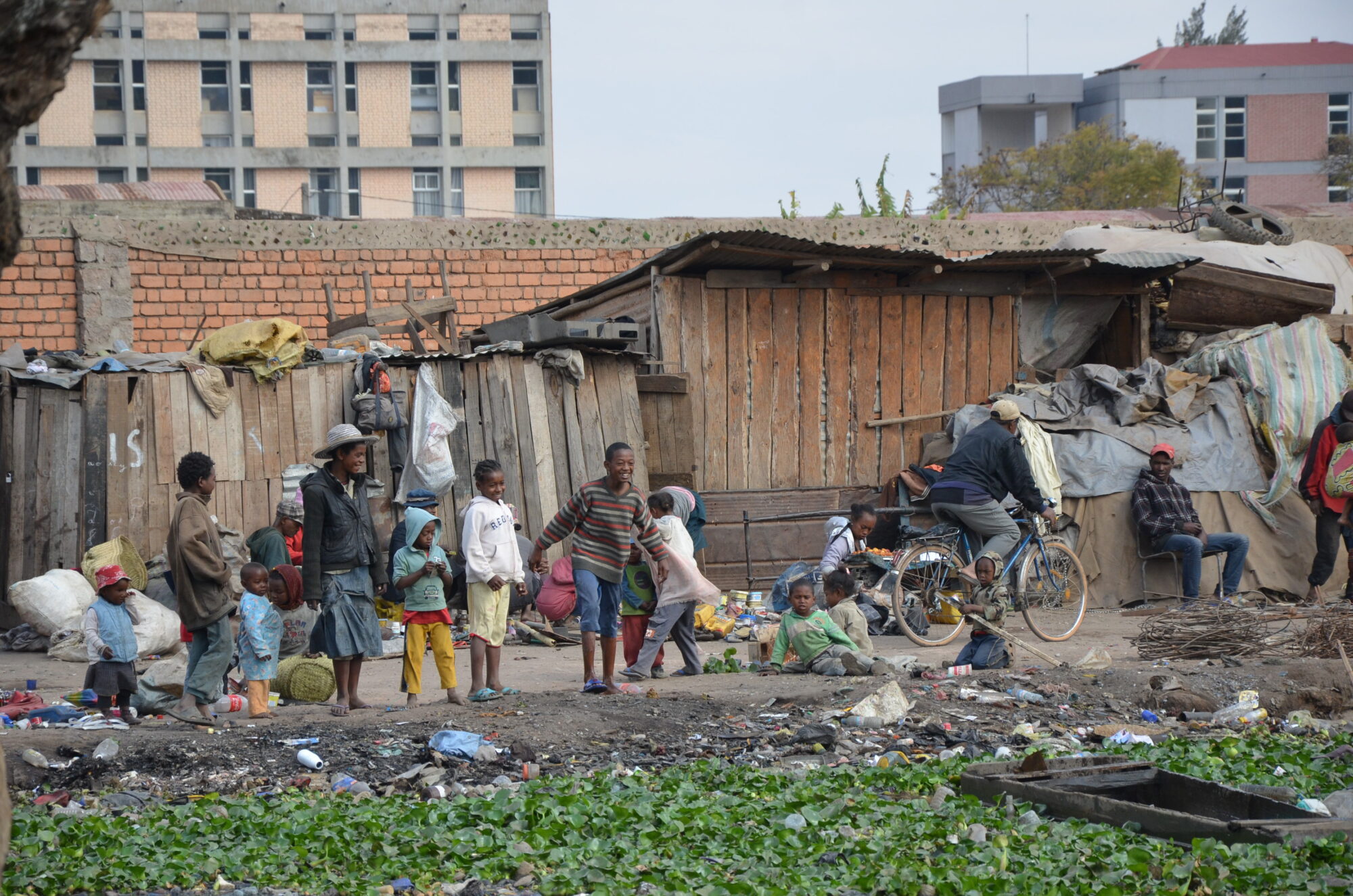
Poverty is not measured solely by household income. It can begin very early, in a childhood marked by malnutrition, school difficulties, child labor, or lack of essential services. The phenomenon is massive. The World Bank estimated that 75.2% of the population lived in poverty in 2022, with a rate reaching 79.9% in rural areas. But its analysis especially highlights the intergenerational dimension of the phenomenon. Indeed, child malnutrition, child labor, early marriages, and teenage pregnancies contribute to keeping families in poverty. For children, poverty goes far beyond the question of money. A UNICEF analysis, based on available data, shows that 67.6% of Malagasy children were deprived of at least two essential dimensions of well-being, namely health, education, water, sanitation, or housing.
Accumulation
The mechanism is devilishly simple. A malnourished child learns less well. A child who leaves school early has fewer skills. One who enters work prematurely risks remaining confined to the least productive and lowest-paying activities. According to the World Bank's human capital index, a child born in Madagascar should reach approximately 39% of their productivity potential in adulthood if they benefited from complete education and good health.
Invest
This is precisely why social protection should not be considered solely as emergency aid. Cash transfers can allow families to keep their children in school and invest more in their health and nutrition. The real challenge is therefore less about repairing poverty in adulthood than preventing it from being created during childhood. For the country, investing early in children is not just social policy—it is an economic strategy.