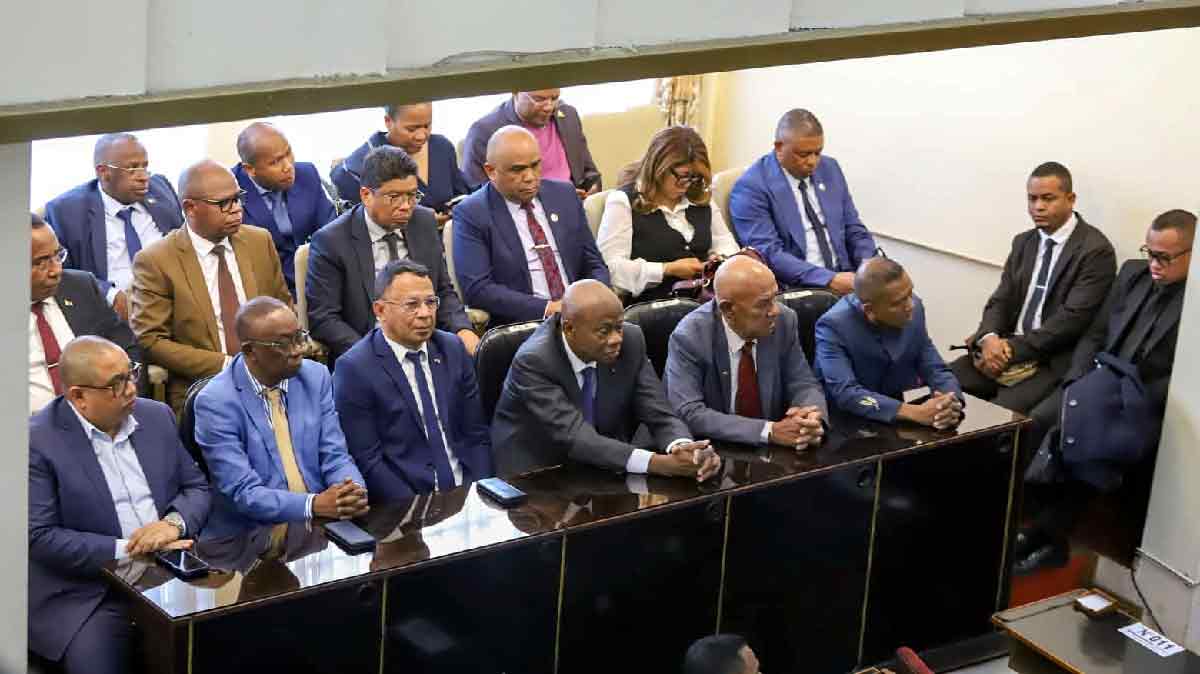
The extraordinary parliamentary session opened yesterday at Tsimbazaza. Cybercrime, digital technology, nuclear energy, gambling, and financial cooperation within the SADC are among the subjects to be addressed during the National Assembly's extraordinary session, which opened yesterday at Tsimbazaza. This extraordinary session promises to be particularly dense, with seven bills on the agenda. Convened by decree n°2026-1691, it officially began yesterday at the National Assembly, marking the return of deputies to the Tsimbazaza chamber. Following the opening ceremony, the Permanent Bureau was to meet to finalize the agenda and organize parliamentary proceedings. At press time, the detailed schedule of sessions had not yet been made public.
Seven texts
Several strategic areas will be at the heart of discussions. Deputies will notably examine bill n°016/2026 authorizing ratification of the protocol on finance and investment within the Southern African Development Community (SADC). Bill n°019/2026 concerns the regulation of gambling activities and gaming establishments. Another text, n°038/2026, provides for amendments to certain provisions of the general statute of the military. Technological issues also occupy an important place in this session. Project n°039/2026 concerns the safe, secure, and peaceful use of nuclear technologies in Madagascar. Text n°040/2026 addresses electronic communications and digital infrastructure. Furthermore, the fight against cybercrime will be the subject of two major initiatives. Bill n°042/2026 provides for a comprehensive revision of the 2014 law on combating cybercrime. To this is added project n°043/2026 authorizing ratification of the United Nations Convention against Cybercrime, known as the "Hanoi Convention," adopted in Hanoi, Vietnam, on October 25, 2025.
Agenda
Following the official opening, the next step falls to the Permanent Bureau, responsible for coordinating parliamentary work and organizing its proceedings. The institution recalls that this body directs and coordinates the activities of the National Assembly. This extraordinary session should thus concentrate, in a compressed timeframe, debates touching on regional economic integration, digital transformation, legal security, and new technologies—subjects whose implications far exceed the legislative framework alone.