Domestic
National Consultation Kicks Off Tuesday in Andohatapenaka
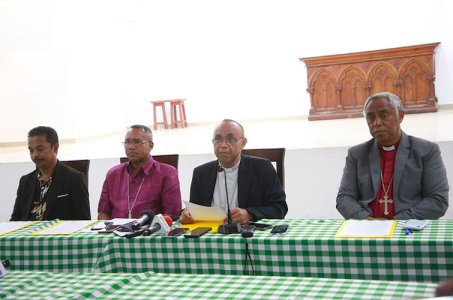
The National Consultation will be launched this Tuesday, August 25, at Village Voara Andohatapenaka. This day, themed around recovery and renewal, is intended to mark the process's entry into a more concrete phase, with the presentation of its main stages and the national coordinator tasked with steering it. The Ecumenical Council of Christian Churches of Madagascar (FFKM) will open the meeting with an ecumenical service scheduled for 3 p.m. This moment of reflection is meant to hold the nation in prayer before the sequences dedicated to the National Consultation begin. Several dignitaries, authorities, and religious leaders are expected to attend. The program provides for guest reception between 1 p.m. and 2 p.m., before the arrival of dignitaries and authorities from 2:30 p.m. The ecumenical service will then begin at 3 p.m. From 3:45 p.m., several speeches are planned, including the presentation of the different stages of the process. The ceremony should conclude at 5:15 p.m., followed by an official photo at 5:30 p.m. Beyond the symbolic dimension of this day, attention will focus mainly on the content of announcements. After several weeks of waiting, political, social, and institutional actors hope to gain greater visibility on the method that will be used to conduct consultations across the country. The appointment of the national coordinator should also help better identify the structure responsible for monitoring and organizing the entire system. The National Consultation should be based on a grassroots approach. Consultations should be conducted down to the fokontany level to gather expectations, proposals, and concerns expressed by the population. These contributions must then be centralized, examined, and synthesized at different levels before being integrated into a national vision. The stated ambition is to develop common directions capable of supporting the continuation of the Refoundation process. This approach comes in a context marked by political upheaval and mobilizations in September and October 2025, which have profoundly altered Madagascar's institutional landscape and strengthened expectations around a renewal of state functioning. The timeline is one of the major stakes. According to the Refoundation program presented to the Southern African Development Community, an electoral or constitutional deadline is envisioned between May and July 2027. The pace of the National Consultation will therefore be particularly observed, as its conclusions should help prepare the next stages of the political and institutional process. Implementing a nationwide consultation represents, however, a considerable undertaking. Deploying teams, organizing meetings in different localities, collecting contributions, and processing them will require significant human, logistical, and financial resources. The ability to guarantee effective participation in all regions will be one of the first credibility tests of the system. Another challenge concerns the synthesis of proposals. Expectations expressed on the ground can be numerous, sometimes contradictory, and reflect very different realities depending on territories. The challenge will be to identify common priorities without erasing the diversity of local concerns. The FFKM must also ensure the process remains balanced. In a context where political interests remain very present, organizers must prevent the consultation from being dominated by a few actors or reduced to a simple confrontation between political forces. Population participation and method transparency will thus be decisive in giving weight to the conclusions produced. Tuesday's ceremony therefore represents only the first stage of a process set to unfold over several months. But it should establish the foundation of the method, clarify the timeline, and identify those responsible for conducting the next steps. With this launch in Andohatapenaka, the National Consultation now enters a phase where announcements must translate into concrete actions. The coming weeks will show whether the system can truly gather citizens' voices and integrate them into building Madagascar's future institutional framework.
Source: Madagascar Tribune