Politics
Economic, Social and Cultural Council: Parliament Presidents Not Authorized to Petition Body
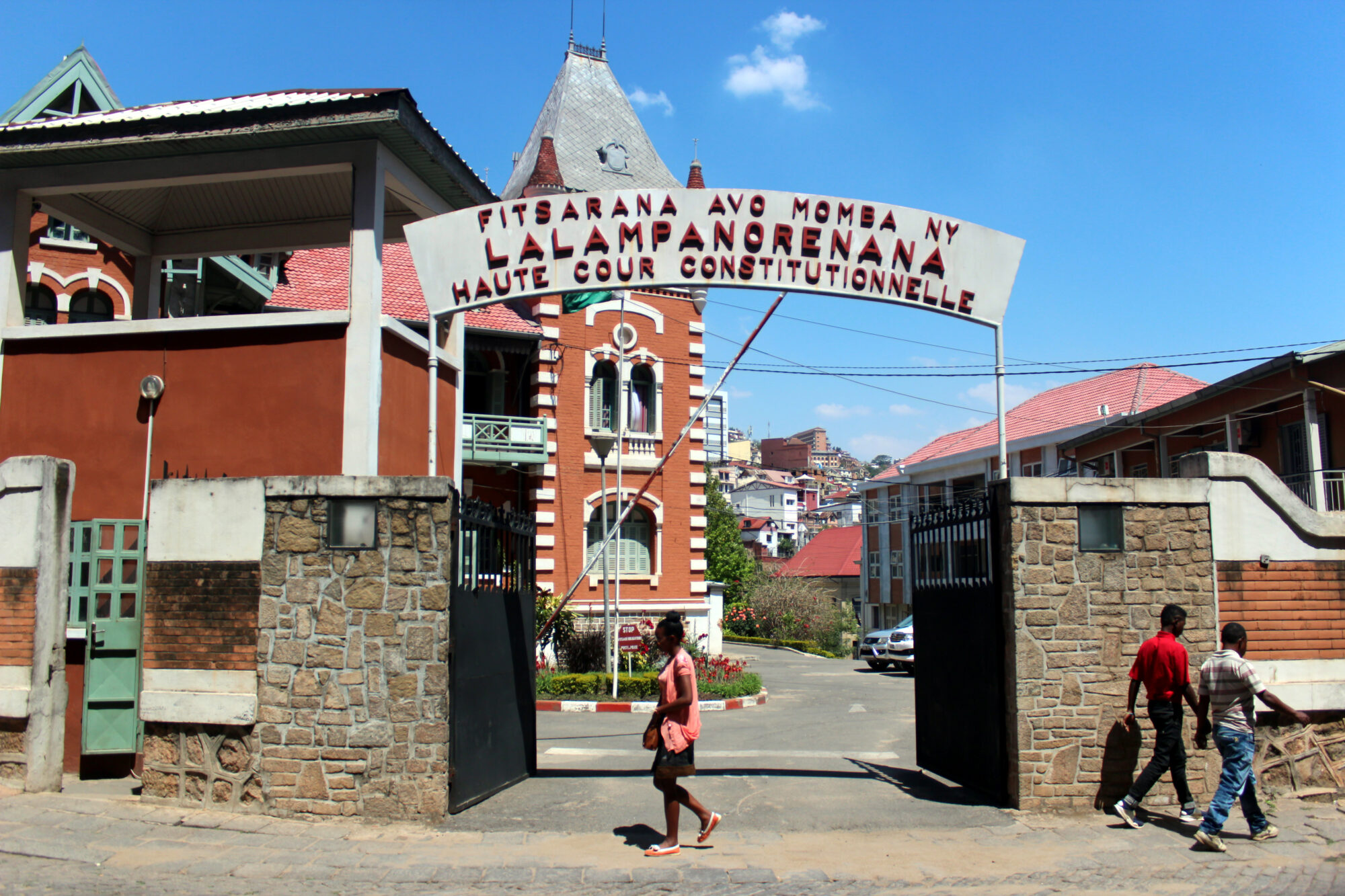
The Constitutional Court has already ruled on the CESC case. The High Constitutional Court (HCC) has struck down part of organic law no. 2026-011 relating to the Economic, Social and Cultural Council (CESC), a consultive body. Petitioned by the President of the Republic's Refoundation before the text's promulgation, the constitutional court notably ruled unconstitutional the provision allowing Parliament presidents to directly petition the CESC. The decision came after the organic law's adoption by the National Assembly on July 2, 2026. Through letter no. 049-PRRM/SGP/DEJ/2026 dated July 20, the Head of State asked the HCC to conduct constitutional review of the text, in accordance with Article 117 of the Constitution. At the heart of the dispute, according to the High Constitutional Court: Article 3 of the organic law. This article provided that the CESC could be petitioned by the government to give its opinion on draft laws, ordinances or decrees, but also "by Parliament presidents" concerning legislative proposals. For the HCC, this extension does not hold. Parliament is thus deprived of the power to petition the CESC. The Constitution is clear, the High Court maintains. Its Article 105 provides that the Economic, Social and Cultural Council, petitioned by the government, gives its opinion on draft laws, ordinances and decrees, as well as legislative proposals submitted to it. The constitutional text also provides that the CESC may conduct, on its own initiative, studies or inquiries on economic, social and cultural matters. However, no provision of this article grants Parliament the power to petition the Council, the High Court recalled. The HCC thus reminds that the legislator cannot expand, through an organic law, the list of authorities authorized to petition a constitutional institution. Such modification would necessarily fall within constituent power and thus require a constitutional revision, according to HCC decision 17-HCC/D3 of August 21, 2026. The constitutional judges' verdict is therefore final. The terms "or by Parliament presidents" are declared unconstitutional and must be removed from Article 3 of organic law no. 2026-011 relating to the Economic, Social and Cultural Council (CESC). Youth is also at the heart of another reservation concerning this organic law. The HCC also examined the CESC's composition. Article 5 of the organic law provides for "a council of 111 elected members, of which at least 50% must come from youth having reached legal age." But the HCC raised an issue with this provision. The text sets a minimum age but determines no upper limit to define the "youth" category. For the High Court, this absence creates "normative uncertainty." It could notably "weaken the principle of equality before the law and compromise the objective of effective representation of the nation's vital forces." The court does not, however, strike down Article 5. It declares it constitutional, but on the condition that the upper age limit for the "youth" category be expressly set by regulation. In other words, a new regulatory text must clarify how far the concept of youth extends within the future CESC.
Source: Midi Madagasikara