Domestic
The Jacket Turners
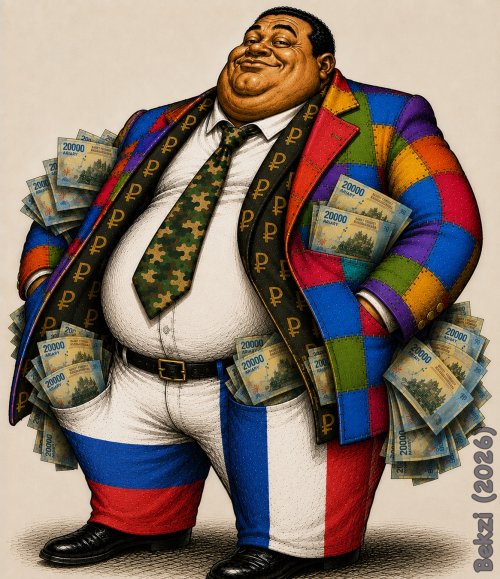
Issue 3 of our weekly series in which our philosopher addresses social issues that may touch on politics, and vice versa. But always without overthinking, because after all, it's the weekend! Welcome, friend of Saturday. Our cabinet examines today a patient that refuses to die, contagious for centuries, and stubbornly refusing any cure: the mpamadika palitao. Madagascar is a land known for its famadihana tradition, the turning of the dead. But in our country, we don't only turn the dead. We also turn our jackets. Politicians and courtiers display themselves without scruples as sakaizan'ny mpandresy. Literally, the buddies of the winner. Knowing how to change sides at the right moment brings luck, or avoids problems. This maintains the cyclical transhumance of chameleon herds, behind the sacred veil of fitiavan-tanindrazana. Mpamadika palitao or mpamadika in short. With each change in power, we witness a transfer market. But unlike high-level football, the political transfer market concerns only one talent: the conjugation of second-group verbs. Betray, contradict, distort, pervert, subvert, divide, debase, soil. Not forgetting the rhyme with lie, a third-group verb. This gives impressive careers for certain subjects who glide easily from one party to another, flirting without scruples with every available trough: Mfm, Arema, Mapar, Hvm, Tim, not forgetting Pisodia. Following them, the yes-thank-you-presidentialists also change their horses without shame. Yesterday we praised Rakoto, today we praise Ranaivo. Tomorrow we will praise Rasoa. Thank God there are as many days in the calendar as there are grammatical tenses. But by constantly turning their jackets, all these fine people will end up turning their pants, their socks, and even their underwear. As the famous saying goes: I lick you; I drop you; I lynch you. The cycle is immutable. Whether it's the tongue of licking, the hands that drop, or the acts that lynch: everything goes to the highest bidder. Politika no atao: we'll leave ethics to philosophy textbooks, political science theses, civil society statements, FFKM sermons, and of course to the speeches and promises of politicians. In decreasing order of respectability. Epidemics of betrayal are cyclical. Those of the Iznogouds who want to become caliph instead of the caliph and the Dilat Larats who applaud them. We remember. Former members of the National Front for the Defense of the Revolution who sparked the 1991 crisis against Ratsiraka. Close associates of Ravalomanana who supported the 2009 coup. Architects of the 2009 coup who later became members of Rajoelina's party. Former supporters of Rajoelina who banded together to topple him in 2025. Waiting for those who will one day pull the rug from under Randrianirina. Because the same causes produce the same effects. And in Madagascar, the causes are called mpamadika palitao. The tsy misy hazon-damosina. The tsy mena-mivadika toa ny andro ririnina. The hawks, always near the true ones. We won't name names. They will be recognized. They will recognize themselves. Or not. Often, they are the same ones navigating from one camp to another, as this guarantees them a status: that of the professional glutton. In Madagascar politics, hunger justifies the means. Unlike misery, ridicule doesn't kill. We won't expect real reform from this circus, let alone an end to the descent into hell. Not in 2026. Not in 2027. Not in 2037. One could wonder about the why and how of this propensity of Malagasy politicians to change sides like weathervanes. But ultimately, are we sure the right questions are why and how, or is it how much? If necessary, ethics can indeed go to the highest bidder, especially as presidential elections approach. From experience, mpamadika palitao know that the taps will open. So it's a race to reserve a place well below to collect the "compensation" in exchange for one's dignity. In politics, envelopes and briefcases often serve as distractions, and even as diversions. In Madagascar, few remain faithful to their party during desert crossings, once power is lost. Whatever one thinks of them and their political parties, the loyalty and constancy of people like Ange Andrianarisoa (AREMA), Julien Andriamorasata (TIM), Rivo Rakotovao (HVM), or Sahondrarimalala Marie Michelle (TGV) deserve respect. Geographically, the Palace of Deputies in Tsimbazaza borders that of academics and the lemur zoo. We regret that the flow of inspiration doesn't always follow the ideal direction.
Source: Madagascar Tribune