Domestic
National Consultation Process Begins One Month Behind Schedule
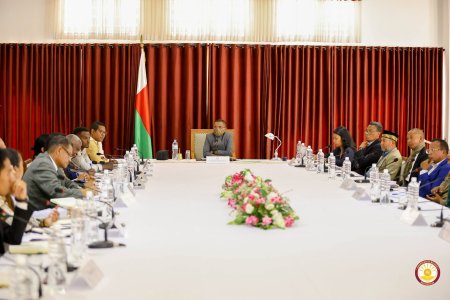
Madagascar's national consultation process has entered a concrete phase. After several weeks of waiting, the mechanism tasked with overseeing the process is beginning to take shape. The Technical Committee held its first meeting Friday at the State Palace in Mahazoarivo, led by Prime Minister Mamitiana Rajaonarison. This structure will notably be responsible for accompanying the work conducted with the Ecumenical Council of Christian Churches of Madagascar (FFKM). The Committee must monitor the different stages of consultation and ensure the established timeline is respected. It will also serve as a liaison with the government: conclusions from discussions will be transmitted to the Prime Minister before their implementation is monitored within the framework of the Refoundation. Several components of society are represented, including young people from different provinces, civil society, traditional authorities, religious organizations, and the private sector. Meanwhile, the FFKM is preparing the public launch of the process. The Ecumenical Council announced Friday a service to inaugurate the headquarters from which operations will be coordinated. Scheduled for Tuesday, this ceremony will also reveal the identity of the national coordinator and present the main stages of consultation. Before this meeting, stakeholders will gather Saturday for a preparatory meeting. However, the launch comes nearly one month behind schedule. The timeline presented by the FFKM on June 21 planned the start of local consultations in August. Discussions are to begin at the fokontany level before progressively moving up to higher levels, culminating in a national synthesis. This delay now places organizers facing a major constraint: time. The consultation must contribute to defining the institutional orientations of the Refoundation and, notably, to produce the constitutional text or texts that could be submitted to voters. However, a first electoral consultation is planned between May and July 2027. It could take the form of a referendum or constitutional election, depending on the mechanism ultimately chosen. A presidential election must also be held before the end of 2027. Upon returning from the Southern African Development Community (SADC) summit, Colonel Michaël Randrianirina reaffirmed that elections would be held in 2027. According to the head of state, the Independent National Electoral Commission (Ceni) should be able to organize voting from July onward, after completion of the electoral roll overhaul. Two projects are thus advancing simultaneously. On one hand, the FFKM and Technical Committee must advance consultation and institutional discussions. On the other, Ceni continues electoral preparations, while political consultations seek to reach agreement on the rules of the future election. This parallel approach could help preserve the electoral schedule despite the delay in consultation. The challenge now is to avoid further delays that could postpone the 2027 appointments and, with them, the end of the transition period.
Source: Madagascar Tribune