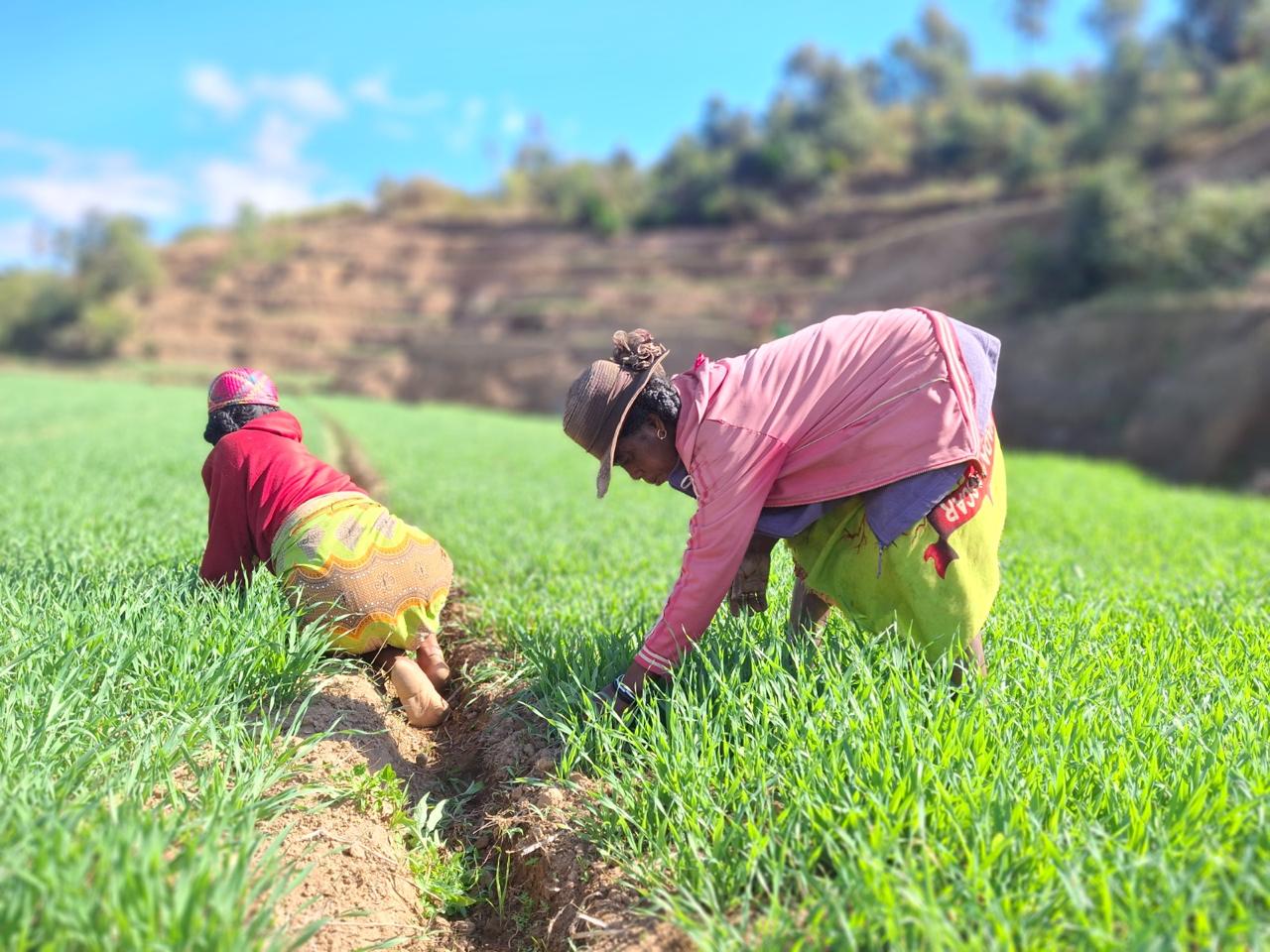
Without urgent measures, the barley sector that has long sustained Amoron'i Mania's economy risks collapse. An essential economic activity for residents of the rural commune of Anjoma Manandriana in Manandriana district, Amoron'i Mania region, barley cultivation could simply disappear if emergency measures are not taken by authorities. To the dismay of farmers who have decided to appeal to the country's highest authorities to save what can still be saved.
Distress
"We urge the President of the Republic and the people's representatives to closely examine our situation and take necessary measures to save the barley sector, as it is our main means of subsistence," said Isabelle Razoeliarisoa, a farmer working in this sector, summarizing the distress of these Anjoma Manandriana peasants. A cry of alarm that far exceeds the scope of a simple agricultural activity. For nearly three decades, barley cultivation has indeed been the primary means of subsistence for a large part of the local population. Fenonantenaina Honoré Patrick, mayor of Anjoma Manandriana commune, recalls that barley cultivation began there in 1996. "Thirty years later, this activity remains at the heart of the local economy," he explains, noting that even today nearly 90% of the population lives from barley cultivation. Unfortunately, this could change due to difficulties facing the sector, particularly due to taxation.
Reduction in cultivated areas
According to producers' accounts, the area devoted to barley has significantly decreased, now representing only about 1,600 hectares, and the sector has only some 15,000 producers in Madagascar in 2026, compared to 20,000 in 2025. In just one year, 5,000 producers have thus left the sector. The situation could worsen if no solution is found. On the ground, this decline directly translates into reduced cultivated areas. Barley producer at Anjoma Manandriana, Andriamangazafy Mamy Rolland testifies to growing difficulty maintaining his activity. "Before, I had 30 ares of barley cultivation, today I'm down to 10 ares. Previously, I cultivated 30 ares. Today, I'm forced to reduce my area to 10 ares and my production has dropped sharply," he confides.
Source of income
For these farmers, the situation is all the more concerning because barley is not simply an off-season crop. It represents a genuine source of income allowing families to eat, receive healthcare, and especially finance their children's education. "Barley cultivation is our main activity, our entire life depends on it, because thanks to this activity I was able to raise and educate my children," explains Isabelle Razoeliarisoa, who wonders how she will meet her family's needs, especially during this school year period. Beyond declining farmer incomes, producers now fear broader consequences for social life in rural areas. The gradual disappearance of means of subsistence could particularly increase precarity and encourage a resurgence of insecurity in rural zones. "We particularly fear the proliferation of banditry in our commune, which has been known until now for its peace," laments Andriamangazafy Mamy Rolland, another barley producer. For producers, the barley question thus now goes beyond the agricultural issue alone. It directly affects rural employment, household incomes, children's education, and social stability of communities dependent on this sector. The ball is now in the court of Refoundation authorities, who also have an interest in seeing the wind of renewal blow through this sector vital to local, regional, and even national economy.