Domestic
Imported Rice: Government Reverses Course, Suspends New Taxes
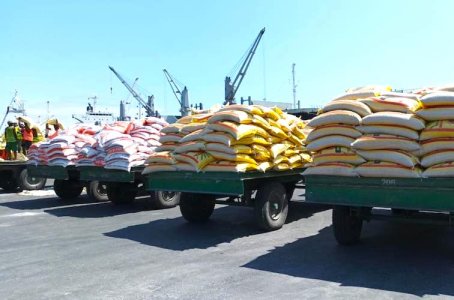
The Malagasy government is reconsidering its fiscal policy on imported rice. The 20% customs duty and 5% VAT planned on luxury rice in the 2026 supplementary finance law are temporarily suspended. This decision comes as the lean season approaches, raising concerns about supply and price tensions. The Commerce Ministry acknowledges that domestic production remains insufficient to fully meet demand. However, this reversal leaves the executive facing a delicate budgetary equation. The taxation was meant to contribute to the 290 billion ariary reduction in fiscal expenditures required under International Monetary Fund conditions. By maintaining the exemption to protect purchasing power and ensure adequate rice supply, the State is temporarily forgoing part of expected revenue. It must now reconcile this imperative with its budget commitments. The situation follows several difficult months for Malagasy rice farming. Cyclones Fytia and Gezani disrupted production basins earlier this year. Meanwhile, stock accumulation had led to price declines. Madagascar remains heavily dependent on external supplies: over 800,000 tonnes were imported last year. In the first half of this year alone, 408,667 tonnes had already entered the country, according to the General Customs Directorate. The fiscal suspension does not, however, mean total liberalization of imports. Commerce Minister Haingotiana Andriamadison intends to maintain the regulatory framework established since March. Operators must submit advance declarations allowing the administration to monitor planned volumes and prevent excessive arrivals that could destabilize domestic production. The government thus maintains its objective of gradually reducing external dependence. Domestic production is expected to exceed 5 million tonnes in 2026, compared to 4.7 million the previous year, driven notably by agricultural intensification. Yet this growth is still insufficient to make local rice fully competitive. Poor condition of certain road infrastructure, transport difficulties, speculation and price manipulation surrounding imports continue to weigh on the sector. As the lean season approaches, the executive prioritizes supply security, even if it means deferring a fiscal measure initially presented as a lever for food self-sufficiency.
Source: Madagascar Tribune