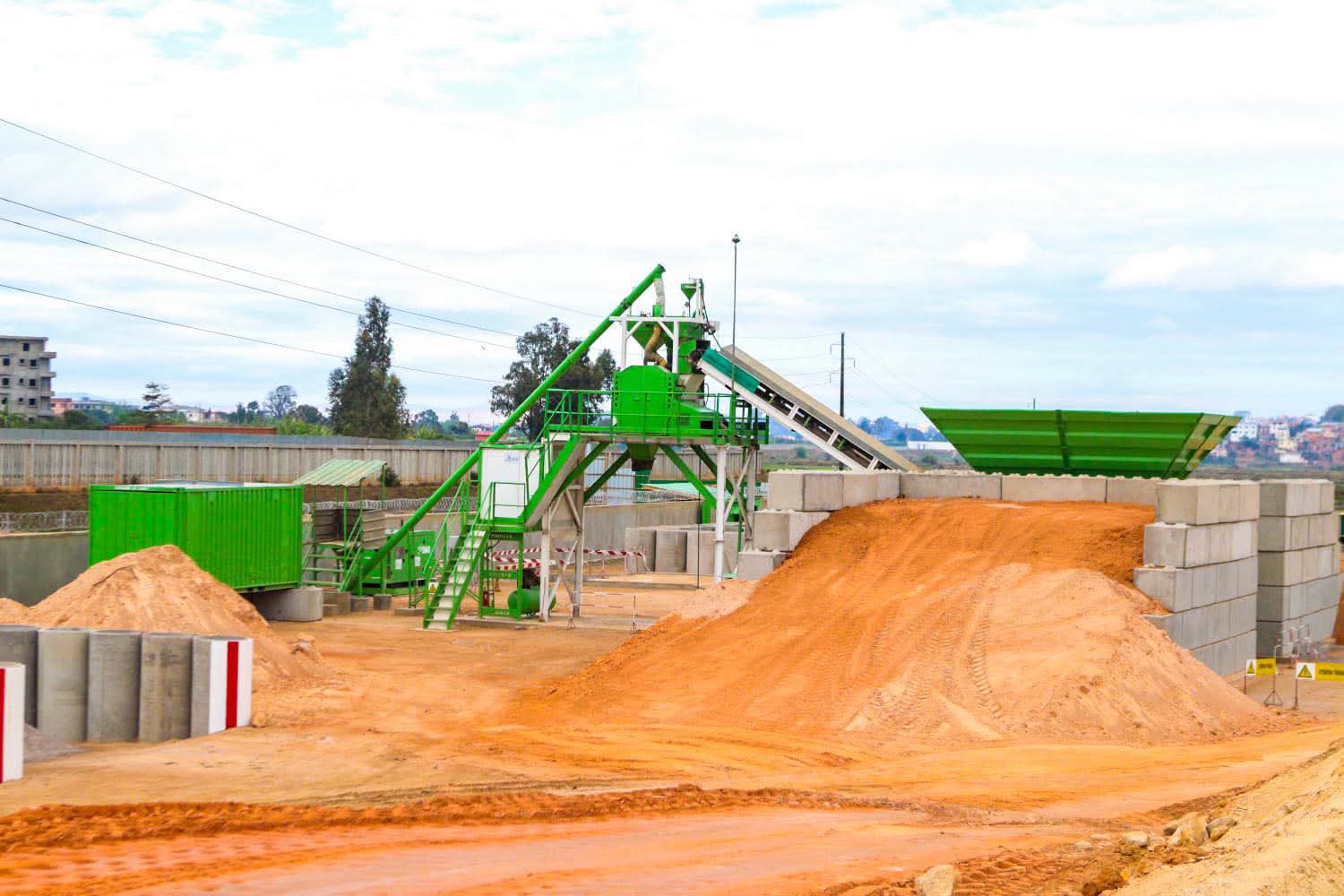
23 km of pipelines to transform water investment into tap water. At Amoronakona, the new drinking water production station is advancing steadily. With an announced capacity of 50,000 m³ per day, this infrastructure represents one of the main components of the JIRAMA WATER III project. The site's protective fence is fully completed and 50% of the infrastructure needed for the work is already installed, according to information gathered during a site visit conducted by the Ministry of Water, Sanitation and Hygiene yesterday. Earthwork is progressing similarly, with 75% completion. Technical design studies are 80% complete, while execution files have reached 20% completion. The station must still pass through several technical stages before moving to functional testing, scheduled before the end of 2027.
Producing more water is not enough. It must also be transported to storage facilities and ultimately to consumers. This is the focus of the project's second phase, which involves laying 23 km of pipelines to connect the new production to the Iavoloha, Ambohibe and Analamahitsy reservoirs. According to the company responsible for the work, the necessary infrastructure is currently being installed. On the administrative side, execution files are being finalized and main pipelines, along with necessary accessories, are being ordered. Additionally, a 1,500 m³ capacity reservoir at Ambohibe will complement this system. Site access has been fully rehabilitated and cleaning work is complete.
From financing to water. The JIRAMA WATER III project is financed by the European Investment Bank, the European Union and the Malagasy State. The project's logic is based on a chain consisting of producing more water, transporting it, storing it and then strengthening its supply to served areas. The 23 km of pipelines are therefore as strategic as the Amoronakona station itself. According to the announced timeline, the first operational tests of the station are scheduled before the end of 2027. Until then, the challenge will be to maintain the pace of the various projects and ensure that the investment translates into more drinking water available for users.