Society
Ebola Outbreak: Madagascar Suspends Travel to Affected Countries
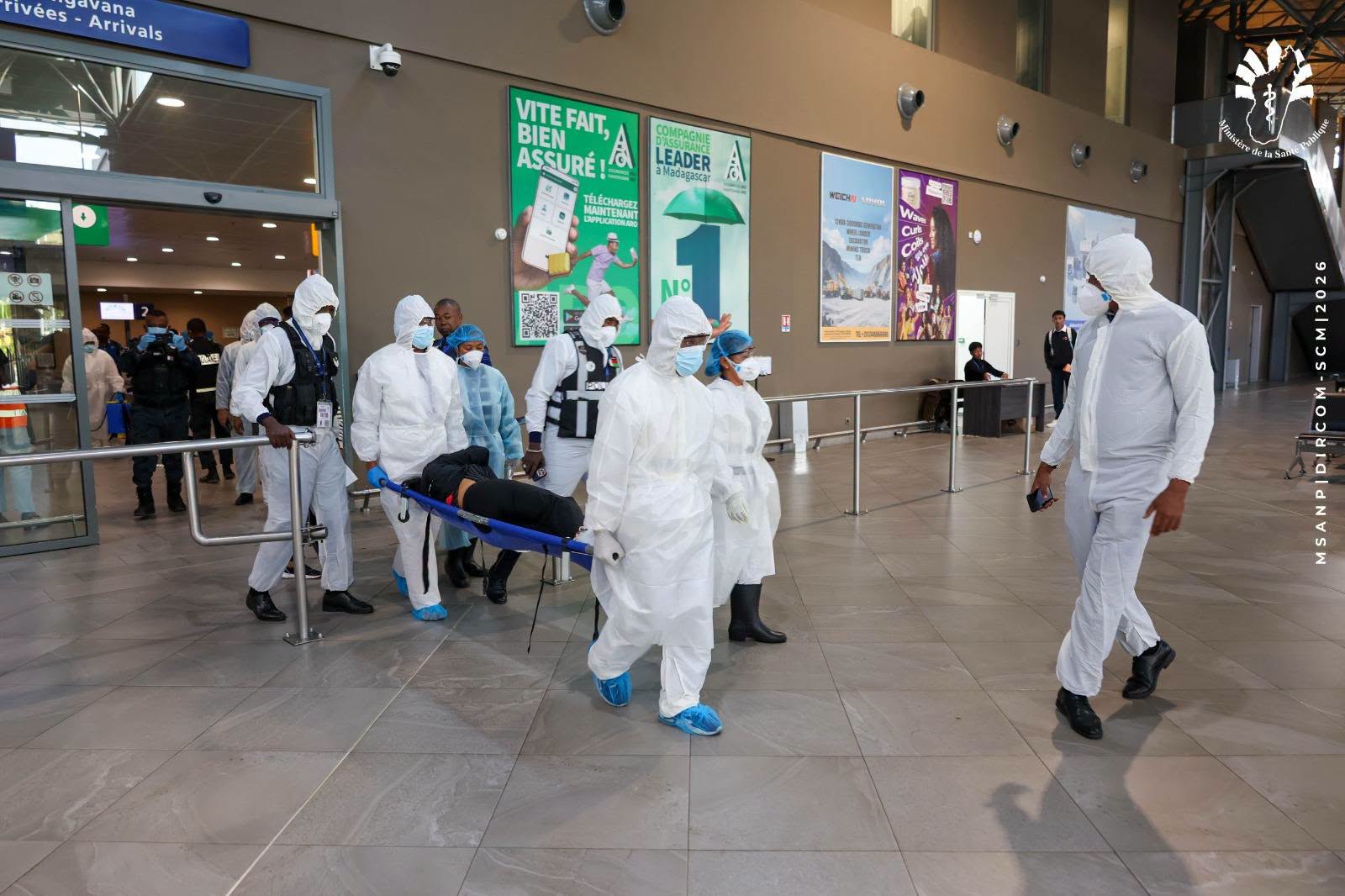
Simulation exercise (SIMEX) at Ivato airport for handling a suspected Ebola case (Health Ministry photo). Measures are being taken against the threat of Ebola virus introduction to Madagascar. In an inter-ministerial note signed on August 19, 2026, the State temporarily suspends all travel to epidemic zones and toughens its stance on false border declarations. To prevent any risk of importing Ebola to Madagascar, Malagasy authorities have decided: all travel from Madagascar to virus-affected countries is now suspended until further notice. This decision is accompanied by strict lockdown of national territory access. Entry to Madagascar is now closed to foreign nationals who have stayed or transited through these risk zones in the past 21 days. Only nationals, legal residents, and diplomatic or humanitarian personnel benefit from an exception, but under strict conditions: mandatory 21-day quarantine at a secure site, entirely at their own expense. The Democratic Republic of Congo (DRC) and Uganda are currently the epicenters of the epidemic. Due to high population mobility and commercial exchanges, several countries bordering the DRC and East Africa are under strict surveillance: Rwanda, Burundi, South Sudan, Tanzania, and the Central African Republic. To ensure compliance with this system, pressure is being placed on air and sea carriers. Airlines and shipping companies must communicate complete passenger and crew lists to Border Police services before each landing or docking. They must also distribute health declaration forms, which will soon be digitized. Authorities warn that no tolerance will be granted: any violation of these directives or false declaration will result in administrative and judicial sanctions provided by current regulations. The Ebola epidemic in the Democratic Republic of Congo (DRC) has exceeded 5,000 cases and over 2,300 deaths, becoming the deadliest in the country's history. The World Health Organization (WHO) indicates that this outbreak, caused by the rare Bundibugyo strain, is progressing rapidly and remains far from controlled. There is currently no approved treatment or vaccine specific to this particular Bundibugyo strain. The virus can be transmitted to humans through direct contact (blood, organs, biological fluids) with infected animals. The disease begins with flu-like symptoms: sudden onset of fever above 38°C, intense weakness, muscle pain, headaches, and throat irritation.
Source: Midi Madagasikara